In Los Angeles, shorts weather barely takes a break, so the razor rarely does either. Many patients we see from across the San Fernando Valley and greater LA arrive tired of the same cycle: shave, get bumps, wax, wait, repeat.
Laser hair removal offers a different path. With a full series of sessions, many people see far less hair, and the hair that returns is often finer and lighter. Results depend on your skin tone, hair color and thickness, hormones, and how consistently you complete your sessions.
Our physician-led team in Northridge starts with your skin and medical history, not a package menu. That way, the plan you leave with is built around how your hair actually grows.
Laser hair removal is a medical aesthetic procedure that uses a focused beam of light to reduce hair growth in a targeted area. The light passes through the skin and is absorbed by melanin (the pigment that gives hair its color) in the hair shaft and follicle. That energy turns to heat, which damages the follicle’s ability to grow new hair.
Each pulse of the laser is tuned to a specific wavelength, energy level, and pulse length. Those settings decide how deep the light travels, how much heat builds in the follicle, and how much the surrounding skin is spared. Choosing them well is a clinical decision, which is why the same device can be safe for one patient and risky for another at the wrong settings.
Selective photothermolysis is the scientific principle behind laser hair removal. In plain terms, it means using a specific light wavelength (“photo”) to create heat (“thermo”) that damages one chosen target (“lysis”) while leaving nearby tissue largely untouched. In hair removal, the target is pigment in the follicle. The goal is to heat that pigment long enough to injure the follicle, but not so long that the heat spreads into the skin around it.
Hair grows in three phases: an active growth phase (anagen), a short transition phase (catagen), and a resting phase (telogen). The laser works best on hairs in the active growth phase, when the hair is still firmly attached to the follicle. At any given time, only a portion of hairs in an area are in that phase. Spacing sessions several weeks apart lets each visit reach a new group of follicles as they cycle into active growth.

For many patients, laser hair removal produces long-lasting reduction, but it is not accurate to promise that every hair will be gone forever. Some follicles are only weakened, and some that were resting during treatment may become active later. The American Academy of Dermatology notes that results tend to hold on most body areas, while facial hair in women often returns because of hormonal influence. Maintenance sessions are a normal part of long-term care.
The wording matters here. Many laser hair removal devices are FDA-cleared for “permanent hair reduction,” which FDA 510(k) clearance documents define as a long-term, stable reduction in the number of hairs regrowing, measured at 6, 9, and 12 months after a treatment series is complete. That is a reduction in hair count, not the elimination of all hair in the area. When we talk about expected results during a consultation, we use that same standard.
Lasers emit a single, concentrated wavelength aimed at a specific target. Intense pulsed light (IPL) devices emit a broad spectrum of wavelengths that are filtered before reaching the skin. That broader light can help with concerns like visible sun damage and redness, which is why we offer IPL photofacial treatments for skin tone concerns. For hair reduction, especially in deeper skin tones, a laser’s focused wavelength generally gives the provider more precise control over where the energy goes.
Medical-grade hair removal lasers generally fall into three wavelength families. Wavelength is measured in nanometers (nm), and it largely decides how deep the light travels and how strongly skin pigment competes with hair pigment for the energy. No single wavelength is right for everyone.
The alexandrite wavelength is strongly absorbed by melanin, which makes it efficient on dark hair in fair to light olive skin. That same strong absorption is the reason it calls for extra caution in deeper or tanned skin, where pigment in the skin itself can absorb more of the energy.
The Nd:YAG (neodymium-doped yttrium aluminum garnet) wavelength travels deeper and is absorbed less by surface pigment. That profile makes it a common choice for medium-brown to deep skin tones, because more of the energy reaches the follicle instead of the upper layers of skin. It can feel more intense on some areas, and coarse, dark hair tends to respond better than fine hair.
Diode lasers sit between the other two in wavelength. They are widely used across a broad range of skin types and are often chosen for larger body areas. As with any laser, the settings still need to match the patient’s skin tone and hair.
Most modern hair removal systems cool the skin during treatment, using a chilled tip, a cold air stream, or a cryogen spray just before each pulse. Cooling protects the outer layer of skin and makes the heat more tolerable. It is a safety feature as much as a comfort feature.
A well-known device name does not guarantee a good outcome. What matters is whether the wavelength, energy level, pulse duration, and cooling are matched to your skin tone, hair color, hair thickness, and the area being treated. During your consultation, our team explains which approach we recommend for your skin and why, so the reasoning is clear before any treatment begins.
In the past, laser hair removal worked best for people with light skin and dark hair. Advances in technology now allow a much wider range of skin tones to be treated though deeper skin tones call for more careful device choice and settings. Los Angeles patients span every skin tone, so this part of planning is never an afterthought.
The Fitzpatrick scale is a six-point system that classifies skin by how it reacts to sun exposure. Providers use it as one input, alongside hair color and thickness, when choosing laser settings.
| Skin Type | General Description | Typical Sun Response | Laser Planning Considerations |
|---|---|---|---|
| I | Very fair | Always burns, never tans | Strong hair contrast if hair is dark; light or red hair responds poorly |
| II | Fair | Usually burns, tans minimally | Often a good candidate when hair is dark |
| III | Light to medium | Sometimes burns, tans gradually | Wide range of options; tanning status matters |
| IV | Olive to light brown | Rarely burns, tans easily | More conservative settings; longer wavelengths often considered |
| V | Brown | Very rarely burns | Longer wavelengths and careful test spots generally preferred |
| VI | Deep brown to black | Almost never burns | Longer wavelengths, conservative energy, close follow-up |
For lighter skin with dark hair, the contrast between skin and hair pigment lets the laser find its target easily. Many patients in this group respond steadily across a session series. The main precautions are avoiding a fresh tan and protecting treated skin from the sun between visits.
In deeper skin tones, the skin itself contains more melanin that can absorb laser energy. Providers commonly reduce that risk by choosing a longer wavelength such as Nd:YAG, lengthening the pulse so heat builds more gently, using robust cooling, and starting at conservative energy levels. Progress may feel gradual at first, but that measured approach is intentional.
Safe treatment of melanin-rich skin starts before the first pulse. It includes an honest skin history, a review of any past dark marks after acne, bug bites, or waxing, and often a test spot. Patients who know they scar or darken easily should share that early so settings can reflect it.
Post-inflammatory hyperpigmentation (PIH) refers to dark patches that can appear after skin inflammation or injury. It is more common in deeper skin tones and is usually temporary, though it can take months to fade. Lowering the risk involves appropriate wavelength and settings, consistent sun protection, avoiding tanning and self-tanner, and pausing treatment if the skin is irritated. If PIH does develop, our team can walk you through a plan to help it settle.
Usually, not well. Lasers rely on pigment in the hair, and gray, white, light blonde, and many red hairs contain too little of the right kind of melanin to absorb enough energy. Results in these hair colors tend to be limited or absent. Electrolysis, which treats each follicle individually with an electric current rather than light, is often a better fit for hair that lacks pigment.
Patients from many backgrounds visit our Northridge office, and no two of them share the exact same skin and hair. Common goals we hear include reducing dense or coarse hair, easing razor bumps, and managing facial hair that returns quickly after threading or waxing. Skin tone across these communities varies widely, so we plan by your actual Fitzpatrick type, hair characteristics, and history of pigment changes rather than by background. That individualized approach is what keeps treatment both effective and safe.
Lasers designed for hair removal can be used on most parts of the face and body. The main exceptions are areas close to the eyes, where the risk of eye injury is too high. Your provider will confirm which zones are appropriate for you.
The alexandrite wavelength is strongly absorbed by melanin, which makes it efficient on dark hair in fair to light olive skin. That same strong absorption is the reason it calls for extra caution in deeper or tanned skin, where pigment in the skin itself can absorb more of the energy.
The Nd:YAG (neodymium-doped yttrium aluminum garnet) wavelength travels deeper and is absorbed less by surface pigment. That profile makes it a common choice for medium-brown to deep skin tones, because more of the energy reaches the follicle instead of the upper layers of skin. It can feel more intense on some areas, and coarse, dark hair tends to respond better than fine hair.
Diode lasers sit between the other two in wavelength. They are widely used across a broad range of skin types and are often chosen for larger body areas. As with any laser, the settings still need to match the patient’s skin tone and hair.
Most modern hair removal systems cool the skin during treatment, using a chilled tip, a cold air stream, or a cryogen spray just before each pulse. Cooling protects the outer layer of skin and makes the heat more tolerable. It is a safety feature as much as a comfort feature.
A well-known device name does not guarantee a good outcome. What matters is whether the wavelength, energy level, pulse duration, and cooling are matched to your skin tone, hair color, hair thickness, and the area being treated. During your consultation, our team explains which approach we recommend for your skin and why, so the reasoning is clear before any treatment begins.
Lasers designed for hair removal can be used on most parts of the face and body. The main exceptions are areas close to the eyes, where the risk of eye injury is too high. Your provider will confirm which zones are appropriate for you.

Facial hair is one of the most frequently treated concerns. Sessions are short, often just a few minutes for the upper lip or chin. Because facial hair is closely tied to hormones, many patients need periodic touch-ups after their initial series, and new hair growth on the face can be worth mentioning to your primary care physician.
Underarms are quick to treat and often respond well because the hair tends to be dark and coarse. Patients who are also bothered by underarm sweat sometimes ask about MiraDry underarm treatment, which targets sweat and odor glands and may reduce underarm hair as a secondary effect.

Forearms, full arms, hands, and fingers can all be treated. Arm hair is often finer than underarm or leg hair, so results may build more gradually. Hand and finger treatments take only minutes.
Treatment can follow the standard bikini line, extend further inward, or cover the full Brazilian area, depending on your preference. Because this skin is thinner and more sensitive, providers adjust settings carefully and discuss comfort options in advance. Privacy and draping are part of every visit.

Legs are one of the most popular body areas, especially for patients who are tired of daily shaving. Lower legs, upper legs, or full legs can be treated, and full-leg sessions take longer than smaller zones.
These larger areas are commonly treated for men but are open to anyone. Coarse, dark hair in these zones often responds well. Session times are longer, and planning may include a discussion of hormonally driven hair that can regrow over time.

Laser can define the neckline, cheek line, or beard edges so grooming takes less effort. It can also help patients whose razor bumps cluster along the neck. Shaping is planned conservatively, because hair that is reduced is not easily brought back.
Some patients choose to treat several areas in a single plan. Combining zones can make scheduling simpler and is often priced more favorably than booking each area alone. A full-body plan is built after your consultation so the sequence, timing, and comfort strategy fit your schedule.
More men are choosing laser hair removal for grooming, comfort, and relief from razor irritation. Men’s goals tend to center on larger areas and on shaping rather than full clearance, which changes how a plan is built.
Back and shoulder hair is hard to manage alone and often regrows quickly after waxing. Laser can thin these areas substantially over a series. Many men prefer a natural-looking reduction over complete clearance, and settings can be planned around that goal.
Some men want a fully smooth chest for athletics or personal preference, while others want thinning or a cleaner abdominal line. Either goal is reasonable. We talk through the look you want before treatment, since reduced hair is difficult to restore.
Shaping the upper cheek line and neckline can reduce daily edging and help men who get razor bumps under the jaw. Treatment usually stays outside the main beard area unless full facial reduction is the goal.
Male hair is often denser and more strongly driven by androgens (hormones such as testosterone), and larger areas mean longer sessions. Research also suggests men may face a higher risk of paradoxical hypertrichosis, an uncommon response in which hair growth increases near treated areas. A 2025 study in the Journal of Cosmetic Dermatology found this effect more often in men, most commonly on the back, upper arms, and shoulders. Careful settings and close follow-up help catch it early if it appears.
Laser hair removal is a cosmetic procedure, but some patients pursue it because hair is contributing to skin irritation or making another part of their care harder. In each case, laser reduces hair; it does not treat the underlying medical condition. Any related condition should stay under the care of the clinician who manages it.
Pseudofolliculitis barbae is the medical name for razor bumps: inflamed bumps that form when shaved hairs curl back into the skin. It is especially common with tightly curled hair. Razor bumps and acne-like breakouts after hair removal among the reasons people consider laser. With fewer hairs growing, many patients notice fewer bumps over time, though settings must be chosen with care in deeper skin tones.
Hirsutism means coarse hair growing in a male-type pattern, such as on the chin, upper lip, chest, or abdomen, in women. It is often linked to hormonal conditions such as polycystic ovary syndrome (PCOS). Laser can reduce visible hair, but because the hormonal driver continues, regrowth is more likely and maintenance sessions are common. If unexplained new hair growth is part of your history, Dr. Azizad’s training in internal medicine shapes how we respond: we may recommend a medical evaluation with your primary care physician or endocrinologist alongside cosmetic treatment.
Folliculitis is inflammation of the hair follicles, sometimes triggered by shaving or friction. For some patients with recurring, hair-related irritation, reducing hair in the area may lessen flare-ups. Any active infection needs to clear before laser treatment, and persistent or painful folliculitis should be evaluated medically first.
A pilonidal cyst is a painful pocket that can form near the tailbone, often involving trapped hair. Some surgeons recommend reducing hair in that region after treatment as part of a plan to help lower the chance of recurrence, and research on this approach is ongoing. Laser does not treat an existing cyst. We coordinate timing with your surgeon so the area has healed before any session.
Patients are sometimes referred to reduce hair at a planned surgical site or where a prosthetic liner rests against the skin, since hair in these areas can contribute to irritation. When a referring clinician is involved, we follow their timing and guidance so laser treatment supports, rather than interrupts, the rest of your care.
Most healthy adults with pigmented hair can be evaluated for laser hair removal. Whether it is right for you depends on your skin, hair, medical history, medications, and goals, all of which are reviewed in person before any treatment.
People who tend to see the most predictable results:
Some situations call for waiting, adjusting the plan, or choosing another method. This is one reason we ask detailed questions at your first visit.
Some medications make skin more sensitive to light or affect how it heals. Examples include isotretinoin (an oral acne medication), certain antibiotics such as doxycycline, and topical or oral retinoids. Waiting periods vary by medication and by provider, so share your full medication list, including supplements. Please do not stop any prescribed medication on your own; your provider and your prescribing clinician can decide together.
Tanned skin holds more pigment, which raises the risk of burns and dark or light patches. That includes tans from the beach, a tanning bed, or spray and lotion self-tanners. In Southern California, where outdoor time is year-round, we generally ask patients to keep the treatment area covered or protected with sunscreen for several weeks before and throughout treatment, and to tell us about any recent sun exposure.
Laser hair removal is generally postponed during pregnancy as a precaution, because there is limited safety research in pregnant patients. Treatment should also wait if there is an active infection, open wound, or cold sore outbreak in the area. Patients with a history of keloid scarring, vitiligo, or skin conditions that flare with injury should discuss these first, since they may change the approach or make another method a better fit.
A laser that is well matched to one patient can injure another, and that difference is usually visible only after a careful history and skin assessment. Our consultations take place under Dr. Azizad’s supervision and cover your skin type, hair, medications, and history of scarring or pigment changes. When your skin tone, history, or the area being treated calls for it, we perform a small test spot first and check how your skin responds before a full session.
Knowing what happens at each stage makes the first visit easier. Here is how a typical course of care unfolds in our office.
Your first visit focuses on you, not the laser. We review your health history, medications, past hair removal methods, and any history of scarring or dark marks. We assess your Fitzpatrick skin type, hair color, and hair density, then explain the recommended approach, expected number of sessions, and possible side effects. A test spot may be done at this visit when appropriate.
In the weeks before treatment, avoid tanning and avoid waxing, plucking, threading, or sugaring, since those remove the hair root the laser needs to find. Shaving is generally fine and is usually requested a day or so before your session, so the laser energy goes into the follicle instead of hair sitting on the skin. Arrive with clean skin, free of lotion, deodorant, or makeup on the area.
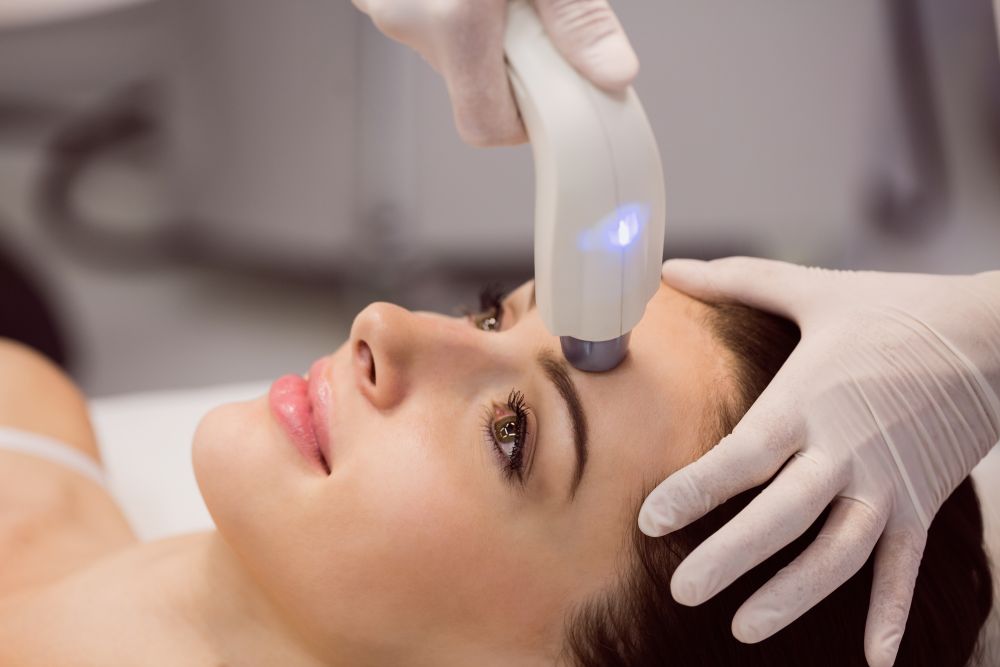
The area is cleansed, and everyone in the room wears protective eyewear. The skin is held taut while the provider moves the handpiece across the area in a planned pattern, with cooling applied throughout. You may notice a faint smell, similar to singed hair, as hairs are heated.
Most patients feel some discomfort but find it manageable. Many people compare the pulses to warm pinpricks or a rubber band snapping against the skin. Thinner-skinned areas like the upper lip and bikini line tend to be more sensitive, and the sensation often eases in later sessions as hair thins.
For small, sensitive areas, a topical numbing cream may be applied before treatment. It typically needs about 30 to 60 minutes to take effect, so plan for that time at your appointment. Numbing products are used carefully and in limited amounts, especially over larger areas. Built-in cooling and short pauses also help.
Redness and mild swelling around the follicles are expected right after treatment and often look like a mild sunburn. A cool compress can ease warmth. Most people return to their normal day right away, keeping the area out of direct sun and following the written aftercare instructions we provide.
Treatment times vary with hair density and the device used. These are approximate ranges for the laser portion of a visit, not including consultation or numbing time.
| Treatment Area | Approximate Session Time |
|---|---|
| Upper lip or chin | 5 to 10 minutes |
| Underarms | 10 to 15 minutes |
| Full face | 15 to 20 minutes |
| Bikini or Brazilian | 15 to 30 minutes |
| Lower legs | 20 to 30 minutes |
| Back or full chest | 30 to 60 minutes |
| Full legs | 45 to 60 minutes or more |
Laser hair removal is a series, not a single appointment. The number of sessions depends on your hair, your skin, the area, and your hormones, and your provider will give you a personal estimate after your consultation.
Most patients need about 6 to 8 sessions for meaningful long-term reduction. Removing unwanted hair can take 6 sessions or more. Some patients reach their goal sooner, and others, especially those with hormonally driven hair, need more.
Many patients can be treated about every 4 to 6 weeks, though the right interval varies by area and individual. Areas with faster hair cycles are often treated closer together, while areas with slower cycles are spaced further apart.
| Area | Commonly Used Interval |
|---|---|
| Face and neck | About 4 to 6 weeks |
| Underarms, bikini, arms | About 6 to 8 weeks |
| Legs, back, chest | About 8 weeks or longer |
Your provider may adjust spacing as your hair thins, since regrowth often slows as the series progresses.
After the initial series, many patients come back for occasional touch-ups when scattered hairs return. How often depends on the area and hormones; some patients need only an occasional visit, while others with hormonally influenced facial hair return more often. Maintenance is a normal part of long-term care, not a sign that treatment failed.
Several factors can push the count higher or lower, and some of them are outside anyone’s control.
Hair color
Dark hair holds more pigment and generally responds faster than light brown or red hair.
Coarseness
Coarse hair tends to respond more readily than fine hair, which carries less pigment.
Density
Dense areas such as the back or bikini may need more sessions to thin noticeably.
Hormones
Hormonal shifts from conditions like PCOS, menopause, or certain medications can activate new follicles and prompt regrowth.
Consistency
Keeping to the recommended schedule helps each session reach follicles at the right stage of growth.
Results build gradually. Knowing the usual pattern helps you tell the difference between normal healing, expected shedding, and something worth calling us about.
Redness, mild swelling, and small raised bumps around the follicles are common and usually settle within a few days. The area may feel warm or slightly tender, like a mild sunburn. Blistering, crusting, or increasing pain are not typical and should be reported to our office promptly.
Treated hairs often appear to keep growing for a short time before they shed, typically within one to three weeks. This is the damaged hair working its way out of the follicle, not new growth. Gentle exfoliation in the shower can help, but avoid plucking or waxing these hairs.
Patients can expect roughly a 10% to 25% reduction in hair after the first treatment. By the middle of a series, many patients notice longer gaps between shaves and patchier, finer regrowth. Progress is rarely perfectly even, and some areas respond faster than others.
Do:
Don't:
Protecting treated skin from the sun is one of the most important parts of aftercare, and it matters even more under Valley and coastal sun. Keep the area covered when you can, apply a broad-spectrum sunscreen of SPF 30 or higher when it is exposed, and reapply after swimming or sweating. Daily sun protection has also been associated with a lower rate of paradoxical hypertrichosis in recent research, which gives patients one more reason to stay consistent.
Laser hair removal is widely performed and generally well tolerated, but it is a medical procedure with real risks. Understanding them helps you make an informed decision and recognize when to call us.
The most common side effects are minor and last about 1 to 3 days:
Less common side effects include blistering, burns, infection, scarring, cold sore outbreaks in people prone to them, and lighter or darker patches of skin. Most color changes fade over time, but some can be permanent. The risk tends to rise with tanned skin, mismatched settings, and missed aftercare. Contact our office promptly if you notice blistering, crusting, worsening pain, or signs of infection such as spreading redness, warmth, or drainage.
Paradoxical hypertrichosis is a rare response in which hair growth increases in or near a treated area instead of decreasing. Reported rates vary widely between studies. It has most often been described on the face and neck, on the back, shoulders, and upper arms, particularly in men. If it occurs, continuing treatment with adjusted settings may help, and our team will review options with you.
Laser hair removal can be dangerous in inexperienced hands. Many complications trace back to choices made before the laser fires: missing a tan, overlooking a photosensitizing medication, or using settings that do not suit the skin. California recognizes this by treating laser hair removal as a medical procedure, with rules on who may perform it. A careful history, conservative starting settings, and attentive follow-up are the most reliable safeguards we have.
In the Los Angeles area, laser hair removal is typically priced per area, per session, and the total depends on how many sessions your plan requires. Because it is generally considered cosmetic, it is usually not covered by insurance.
Smaller areas take less time and energy, so they generally cost less per visit. Larger areas, or several areas combined, cost more per session but may come with better per-area value in a package.
| Area Size | Example Areas | Typical Per-Session Range |
|---|---|---|
| Small | Upper lip, chin, sideburns, hands | About $75 to $250 |
| Medium | Underarms, bikini line, Brazilian, lower legs, forearms, neck | About $150 to $450 |
| Large | Full legs, full back, chest and abdomen | About $400 to $900 or more |
| Full body | Multiple large areas in one visit | Often $800 to $1,500 or more |
Using these ranges, a full series of 6 to 8 sessions on a single small area may total a few hundred to under two thousand dollars, while a large area can run several thousand dollars across a full plan.
Since most patients need several sessions, many practices offer packages that lower the average cost of each visit. Paying per session gives more flexibility, while a package can make sense once you know the area responds and you plan to complete the series. Ask what happens if you need extra sessions, and whether touch-ups are included or priced separately.
Deeply discounted laser offers can be appealing, but the price often reflects fewer sessions or narrower area definitions than a full plan. Before buying, it helps to ask:
Ask our team about current financing and payment plan options during your consultation. Terms can change, so the most accurate details come directly from our office.
Shaving and waxing cost less per visit but continue indefinitely. For many patients, the upfront cost of a laser series is weighed against years of razors, wax appointments, and time spent on upkeep, along with potential relief from razor bumps. Whether laser costs less over time depends on your area, how your hair responds, and how much maintenance you need.
Exact pricing depends on your anatomy, treatment scope, facility fees, and provider experience, and the figures shown are general estimates rather than a quote. Your personalized price comes from an in-person consultation at our Northridge office.
Laser hair removal is widely performed and generally well tolerated, but it is a medical procedure with real risks. Understanding them helps you make an informed decision and recognize when to call us.
The most common side effects are minor and last about 1 to 3 days:
Less common side effects include blistering, burns, infection, scarring, cold sore outbreaks in people prone to them, and lighter or darker patches of skin. Most color changes fade over time, but some can be permanent. The risk tends to rise with tanned skin, mismatched settings, and missed aftercare. Contact our office promptly if you notice blistering, crusting, worsening pain, or signs of infection such as spreading redness, warmth, or drainage.
Paradoxical hypertrichosis is a rare response in which hair growth increases in or near a treated area instead of decreasing. Reported rates vary widely between studies. It has most often been described on the face and neck, on the back, shoulders, and upper arms, particularly in men. If it occurs, continuing treatment with adjusted settings may help, and our team will review options with you.
Laser hair removal can be dangerous in inexperienced hands. Many complications trace back to choices made before the laser fires: missing a tan, overlooking a photosensitizing medication, or using settings that do not suit the skin. California recognizes this by treating laser hair removal as a medical procedure, with rules on who may perform it. A careful history, conservative starting settings, and attentive follow-up are the most reliable safeguards we have.
In the Los Angeles area, laser hair removal is typically priced per area, per session, and the total depends on how many sessions your plan requires. Because it is generally considered cosmetic, it is usually not covered by insurance.
Smaller areas take less time and energy, so they generally cost less per visit. Larger areas, or several areas combined, cost more per session but may come with better per-area value in a package.
| Method | Upfront Cost | Typical Discomfort | How Long Results Last | Ongoing Time Investment |
|---|---|---|---|---|
| Laser hair removal | Higher | Mild to moderate, brief | Long-term reduction after a full series; touch-ups common | Several sessions, then occasional maintenance |
| Electrolysis | Moderate per visit, high overall | Moderate | Often long-lasting for treated follicles | Many sessions, best for small areas |
| Waxing or sugaring | Low to moderate per visit | Moderate | About 3 to 6 weeks | Repeated indefinitely |
| At-home IPL device | Moderate one-time purchase | Mild | Gradual, variable reduction | Frequent self-treatment |
| Shaving | Very low | Minimal, but bumps possible | 1 to 3 days | Ongoing, often daily |
| Depilatory creams | Low | Possible stinging or irritation | Several days | Ongoing |
Using these ranges, a full series of 6 to 8 sessions on a single small area may total a few hundred to under two thousand dollars, while a large area can run several thousand dollars across a full plan.
Since most patients need several sessions, many practices offer packages that lower the average cost of each visit. Paying per session gives more flexibility, while a package can make sense once you know the area responds and you plan to complete the series. Ask what happens if you need extra sessions, and whether touch-ups are included or priced separately.
Deeply discounted laser offers can be appealing, but the price often reflects fewer sessions or narrower area definitions than a full plan. Before buying, it helps to ask:
Ask our team about current financing and payment plan options during your consultation. Terms can change, so the most accurate details come directly from our office.
Shaving and waxing cost less per visit but continue indefinitely. For many patients, the upfront cost of a laser series is weighed against years of razors, wax appointments, and time spent on upkeep, along with potential relief from razor bumps. Whether laser costs less over time depends on your area, how your hair responds, and how much maintenance you need.
Exact pricing depends on your anatomy, treatment scope, facility fees, and provider experience, and the figures shown are general estimates rather than a quote. Your personalized price comes from an in-person consultation at our Northridge office.
Every hair removal method has a place. The right choice depends on your hair color, skin, budget, pain tolerance, and how long you want results to last.
Waxing and sugaring pull hair from the root, so results last a few weeks. They work on any hair color but can cause redness, ingrown hairs, and irritation, and the hair must grow out before the next appointment. Laser targets the follicle and aims for long-term reduction, but it only works on pigmented hair and requires a series.
Electrolysis treats one follicle at a time using a fine probe and an electric current. Because it does not rely on pigment, it works on gray, white, blonde, and red hair that lasers cannot reliably target. It is often described as a permanent method for the follicles it treats, but it is slower and usually needs many sessions, which makes it better suited to small areas or to finishing work after laser.
At-home light devices use lower energy than in-office systems so they can be used without medical supervision. Some people see gradual reduction with consistent use, but results are usually slower and less pronounced. These devices are not designed for every skin tone, and using them on tanned or deeper skin without guidance raises the risk of burns and pigment changes.
Shaving cuts hair at the surface, and depilatory creams dissolve it just at or below the surface. Both are quick and inexpensive, but regrowth returns within days. Shaving can trigger razor bumps, and depilatory creams can irritate sensitive skin.
| Method | Upfront Cost | Typical Discomfort | How Long Results Last | Ongoing Time Investment |
|---|---|---|---|---|
| Laser hair removal | Higher | Mild to moderate, brief | Long-term reduction after a full series; touch-ups common | Several sessions, then occasional maintenance |
| Electrolysis | Moderate per visit, high overall | Moderate | Often long-lasting for treated follicles | Many sessions, best for small areas |
| Waxing or sugaring | Low to moderate per visit | Moderate | About 3 to 6 weeks | Repeated indefinitely |
| At-home IPL device | Moderate one-time purchase | Mild | Gradual, variable reduction | Frequent self-treatment |
| Shaving | Very low | Minimal, but bumps possible | 1 to 3 days | Ongoing, often daily |
| Depilatory creams | Low | Possible stinging or irritation | Several days | Ongoing |
No single method is best for everyone. Some patients combine approaches, using laser for most hair and electrolysis for remaining light or gray hairs.
Every laser hair removal plan in our practice is developed under the direction of Dr. Masoud M. Azizad. His approach reflects a career in medicine first, with aesthetic care built on that foundation.
Dr. Azizad is Board Certified in Internal Medicine. That training centers on the whole patient: medications, hormones, chronic conditions, and how they interact. In laser care, it shows up in practical ways, such as noticing a photosensitizing prescription, recognizing a hormonal hair growth pattern worth evaluating, or adjusting a plan around a health condition.
Dr. Azizad has served as Chairman of the Department of Medicine at Northridge Hospital. That role reflects the trust of physician colleagues in the same community our patients call home.
Dr. Azizad opened his medspa in Moorpark in May 2007, naming it Daria Jade after his daughter, and the practice now sees patients in Northridge. Some of our patients have been coming to us for well over a decade, and those long relationships shape how we plan care: conservatively, with the long view in mind.
In California, laser hair removal is treated as the practice of medicine. Businesses offering these medical services must be physician-owned medical practices, and that nurses and physician assistants who perform laser treatments must do so under a physician’s supervision. A physician-owned practice keeps medical judgment, not sales targets, at the center of each plan.
Over his career, Dr. Azizad has brought new aesthetic technology to patients in the region, including one notable first in the state.
Dr. Azizad was the first physician in California to offer the Lipomatic Vibro-Lipo system, a vibration-assisted liposuction technique also known as Tickle Lipo or Weekend Lipo. Patients interested in body contouring can learn more about our liposuction options.
California law allows physicians to perform laser hair removal, and allows registered nurses and physician assistants to perform it only under a physician’s supervision. Estheticians, cosmetologists, electrologists, medical assistants, and licensed vocational nurses may not perform it under any circumstance. Our laser treatments follow that standard, with licensed clinicians working under Dr. Azizad’s supervision and following protocols that he oversees.
Choosing where to have laser hair removal is a medical decision as much as a convenience one. Here is what patients can expect from us.
Our practice is owned and directed by a physician, and every laser plan is developed under Dr. Azizad’s supervision. Questions about medications, hormones, or skin history are handled by people with the training to answer them.
Two patients treating the same area may need very different wavelengths, energy levels, and pulse durations. We plan settings around your Fitzpatrick type, hair color and thickness, and the area being treated, and we adjust them as your skin and hair respond across the series.
For deeper skin tones, a history of pigment changes, or sensitive areas, we often start with a small test spot. Checking your skin’s response first is a simple step that can prevent avoidable setbacks.
You will know what a package includes, how many sessions it covers, and how touch-ups are handled before you commit. If laser is not the right fit for your hair or skin, we will tell you, and we will point you toward a better option.
Patients travel to our Northridge office from across the San Fernando Valley, greater Los Angeles, and eastern Ventura County. Wherever you are coming from, a little planning around Southern California’s sun makes a real difference to how smoothly treatment goes.
For Valley residents, summer heat and long sunny stretches mean sun protection is a year-round habit, not a seasonal one. Many local patients start their series in fall or winter, when it is easier to keep treated skin covered, so they are further along by swimsuit season.
Patients from Sherman Oaks, Encino, Woodland Hills, and Van Nuys often fit sessions around busy work schedules. Smaller areas can be treated in a short visit, and larger plans can be grouped to reduce trips.
Our roots reach into Ventura County: the practice first opened in Moorpark in 2007. Patients from Moorpark, Simi Valley, and Thousand Oaks who spend weekends hiking local trails or at the coast should plan sessions around outdoor time, since treated skin needs to stay out of direct sun.
Patients also join us from across the wider Los Angeles area, often when they want physician oversight for their plan. If you have an event coming up, such as a wedding or vacation, start several months ahead so you are not scheduling a session days before time in the sun.
From Calabasas, Burbank, Glendale, and Studio City, many patients book consultations first, then schedule their series once they know how many sessions their plan needs and how to time them.
Our office is in Northridge, in the west San Fernando Valley. Current office hours and parking details are confirmed when you book your appointment, so you know exactly where to go before your first visit.
Yes, in most cases. Shaving the area about a day before your session removes hair above the skin so the laser energy goes into the follicle rather than heating surface hair. Avoid waxing, plucking, or threading during your series, since those remove the root the laser needs to target.
Usually, treatment is postponed until a tan fades. Tanned skin holds extra pigment that can absorb laser energy, which raises the risk of burns and dark or light patches. This applies to self-tanner and spray tans too. Tell your provider about any recent sun exposure before each session.
It can be, when the wavelength and settings are chosen for deeper skin tones. Longer wavelengths such as Nd:YAG, longer pulse durations, strong cooling, and conservative starting energy help reduce the risk of burns and pigment changes. A test spot and careful follow-up are often part of the plan.
Many patients are treated about every 4 to 6 weeks, with facial areas often at the shorter end and body areas such as the legs and back spaced further apart. Your provider sets your interval based on how quickly hair returns in each area.
Light activity is usually fine, but most providers suggest avoiding intense workouts, heavy sweating, hot tubs, and saunas for a short period after treatment while the skin settles. Follow the specific aftercare instructions you receive for your treatment area.
Some hair often returns over time, but it is usually finer, lighter, and less dense than before. Hormonal changes can also activate new follicles. Many patients schedule occasional maintenance sessions to keep results where they want them.
Often, yes. Laser can reduce visible facial hair linked to hormonal conditions such as PCOS, though regrowth is more likely and maintenance is usually needed. Laser does not treat the hormonal cause, so a medical evaluation of new or unexplained hair growth is a good idea.
Laser hair removal is generally postponed during pregnancy as a precaution, because there is limited safety research in pregnant patients. Hair changes during pregnancy often shift again after delivery, so most providers recommend waiting and reassessing afterward.
Missing one session does not erase your progress. You can usually pick up where you left off, though a long gap may mean more hair has cycled back into growth. Let our office know as soon as possible so we can reschedule and adjust your plan if needed.
The best plan starts with an honest look at your skin, your hair, and what you want to change. One conversation is usually enough to know whether laser is the right tool for you, and what a realistic result could look like.
Your consultation includes a review of your health history and medications, an assessment of your skin type and hair, and a clear explanation of the recommended approach, number of sessions, aftercare, and pricing. When appropriate, a test spot can be done so you see how your skin responds before committing to a full series.
Ready to stop planning your week around a razor? Book a consultation with our physician-led team in Northridge, serving patients from across the San Fernando Valley, Los Angeles, and Ventura County. Visit n2uaesthetics.com to request your appointment.