
Table of Contents
Before and After: What Actually Changes
How Long Lip Filler Actually Lasts
Common Concerns: Lip Filler Migration
Who Should Consider Lip Filler
Why Choose N2U Aesthetics for Lip Filler
Lip filler is one of the most requested treatments in medical aesthetics, and also one of the most misunderstood. Social media makes it look simple: get injected, walk out with fuller lips, done. In reality, how much it costs, how long it lasts, and what “natural” actually looks like all depend on factors most patients never hear about before they book.
This guide breaks down what lip filler is, what it costs, what before and after results realistically look like, and how long you can expect results to hold, using information from the FDA and board-certified dermatology and plastic surgery sources, not influencer claims.
Key Takeaways
- Most lip fillers are made from hyaluronic acid (HA), an FDA-regulated, reversible material that can be dissolved with hyaluronidase if needed.
- Cost is typically charged per syringe, and most first-time patients need half a syringe to two syringes.
- Lip filler generally lasts 4 to 6 months, shorter than the 6 to 12 month average for HA filler elsewhere on the face, because the lips are a high-movement area.
- A natural-looking result comes from a conservative, build-up approach rather than maximizing volume in a single session.
- Choosing an experienced, medically trained injector is the most consistent way to reduce risks like migration or asymmetry.
What Lip Filler Actually Is
Most lip fillers used today are made from hyaluronic acid (HA), a sugar molecule that occurs naturally in your skin and connective tissue. In filler form, HA is processed and cross-linked so it holds its shape and gradually absorbs water once injected, which is what creates volume and shape in the lips.
The FDA regulates these products as Class III medical devices, and several HA formulations are specifically approved for lip augmentation, including versions of Juvederm® and Restylane®. This is different from older filler materials like collagen or silicone, which are no longer standard practice for lips.
Because HA fillers are water-soluble, they can also be dissolved with an enzyme called hyaluronidase if a patient is unhappy with results or if a complication occurs. That reversibility is one of the main reasons HA has become the standard choice for lip enhancement over less predictable materials.
At N2U Aesthetics, lip filler is offered as part of a broader dermal filler menu, including Restylane, which is specifically noted as a common choice for patients looking for fuller lips or improved lip definition.
How Much Does Lip Filler Cost
Lip filler is typically priced per syringe rather than as a flat fee, and most patients need between half a syringe and two full syringes depending on their starting lip volume and desired result. Nationally, per-syringe pricing commonly falls in a broad range depending on the product used, the provider’s experience, and geographic location, since injectors in major metro areas like Los Angeles generally price differently than smaller markets.
A few things actually move the price beyond the syringe count:
- Product brand. Juvederm, Restylane, and Belotero® are formulated differently and are not interchangeable in price or behavior.
- Injector experience. Board-certified physicians and highly trained injectors often price differently than newer providers, and this is one area where paying less up front can cost more if a correction is later needed.
- Add-ons. Numbing options, follow-up touch-ups, and combination treatments (like pairing lip filler with a lip flip using Botox®) can affect the total.
The one thing to watch for is heavily discounted “flash sale” lip filler pricing. When the cost is dramatically below market rate, it is worth asking directly what product is being used and who is administering it, since this is a medical procedure regardless of how casually it is marketed.
Before and After: What Actually Changes
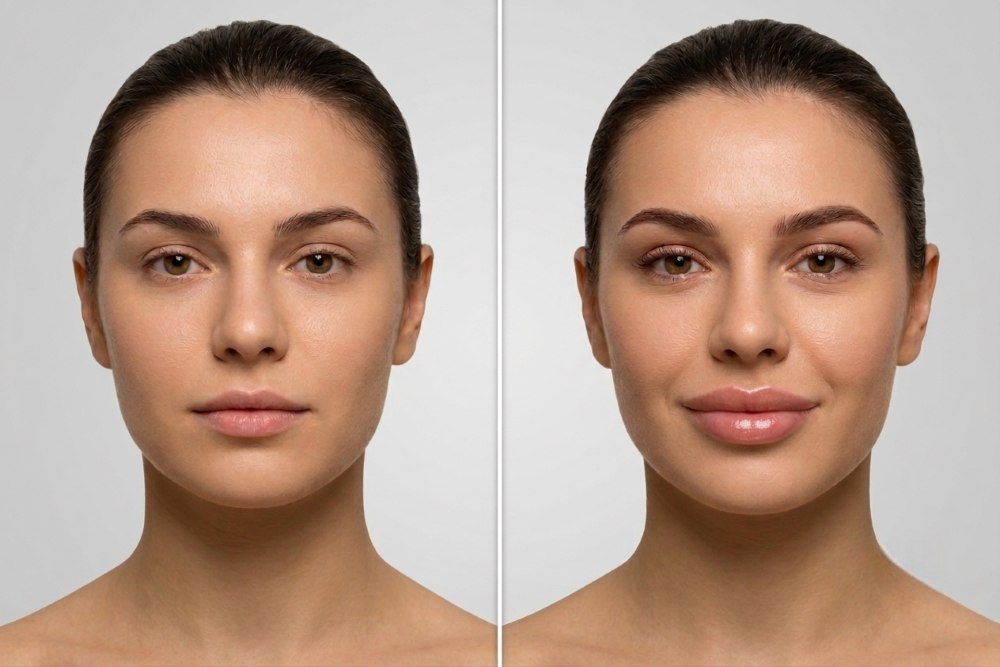
A well-done lip filler result should not look like a dramatic transformation in a single session. Reputable before and after cases typically show:
- Improved lip border definition, especially along the cupid’s bow
- Balanced proportion between the upper and lower lip, since many patients naturally have a thinner upper lip
- Subtle volume that maintains normal lip movement and expression
Overfilled results, the kind that circulate widely on social media, usually come from injecting too much volume too quickly rather than from the filler itself. This is why a conservative, build-up approach across sessions is generally considered safer and more predictable than trying to achieve a final look in one visit.
Swelling is normal for the first 24 to 72 hours after treatment, and lips often appear larger than the final result during this window. Bruising can also occur since the lips have a dense network of small blood vessels. Final results are typically judged at the two-week mark once swelling has fully resolved.
READ MORE: Botox vs. Dysport: Which One Actually Works Better for You?
How Long Lip Filler Actually Lasts
This is where expectations often go wrong. According to the FDA, hyaluronic acid filler effects generally last around 6 to 12 months, but the lips specifically tend to metabolize filler faster than other facial areas like the cheeks or jawline. This is because the lips are a high-movement area, constantly used for talking, eating, and expression, which breaks down the HA gel more quickly than in low-movement areas.
In practice, many patients find lip filler results last closer to 4 to 6 months before a noticeable volume decrease, even though the same product might last closer to a year elsewhere on the face. This does not mean the product failed. It is a normal part of how HA filler behaves in a high-motion area, and it is one of the most common points of confusion for first-time patients.
Repeated treatments over time can sometimes extend how long results last, since consistent HA presence may encourage some natural collagen response in the treated area, though this varies by individual and is not guaranteed.
Common Concerns: Lip Filler Migration
One term that comes up frequently in patient research is lip filler migration, where filler spreads beyond the intended injection area, sometimes creating a flattened or blurred appearance above the lip line. This is more strongly associated with certain filler types, larger injected volumes, and technique, rather than being an unavoidable risk of all lip filler.
Choosing an experienced, medically trained injector who understands lip anatomy and uses appropriate product volume is the most consistent way to reduce this risk. It is also one of the clearest reasons reversibility matters. If migration or asymmetry does occur, hyaluronidase can dissolve the HA filler and allow a correction.
Aftercare Basics
Aftercare for lip filler is straightforward but matters for minimizing swelling and bruising:
- Apply ice intermittently for the first few hours after treatment
- Avoid strenuous exercise and excessive heat exposure for about 24 hours
- Stay hydrated, since HA filler draws in water
- Avoid additional facial treatments in the same area for one to two weeks
- Skip blood-thinning substances like alcohol and certain supplements immediately before and after treatment when possible
Most patients return to normal activities the same day, with visible swelling typically resolving within a few days.
Who Should Consider Lip Filler
Lip filler is generally a good option for adults over 21 who want to address thinning lips from aging, improve lip symmetry, or add definition without surgery. It is not a permanent decision, which makes it a lower-commitment way to test a change in appearance compared to surgical lip augmentation.
A consultation is the appropriate first step to determine the right product and volume for your anatomy, rather than choosing a syringe count in advance based on what looks good on someone else.
Why Choose N2U Aesthetics for Lip Filler
N2U Aesthetics is led by Dr. Masoud M. Azizad, a board-certified physician with a background in internal medicine and aesthetics, serving patients throughout Northridge and the greater Los Angeles area. Every filler treatment plan is built around individual facial anatomy rather than a standardized syringe count, with a focus on natural-looking, balanced results.
N2U offers multiple HA filler options, including Restylane, so your provider can match the specific product to your lip anatomy and goals rather than defaulting to a single brand. For patients also interested in reducing dynamic lip lines or exploring a lip flip, N2U’s Botox treatment page covers how Botox and filler are sometimes used together for a more complete result.
To find out how much filler your lips would realistically need and what result to expect, schedule a consultation with N2U Aesthetics or call (818)-721-9004.
Contact Us
Frequently Asked Questions
How much does lip filler cost?
Cost is typically calculated per syringe and depends on the product used, the amount needed, and the provider’s experience. Most patients need half a syringe to two syringes for their first treatment.
How long does lip filler last?
Most hyaluronic acid fillers last 6 to 12 months in general, but lip filler specifically tends to last closer to 4 to 6 months due to how much the lips move throughout the day.
Is lip filler painful?
Most lip fillers contain lidocaine, a numbing agent mixed directly into the product, and topical numbing cream is often applied beforehand as well. Discomfort is generally mild and brief.
Can lip filler be reversed?
Yes. Because most lip fillers are hyaluronic acid based, they can be dissolved with hyaluronidase if the result needs to be adjusted or corrected.
What causes lip filler migration?
Migration is associated with filler type, injected volume, and injection technique. Choosing an experienced medical injector and a conservative approach reduces this risk significantly.
This article is for general informational purposes only and is not a substitute for professional medical advice, diagnosis, or treatment. Candidacy for lip filler, appropriate product selection, and expected results vary by individual and should be discussed with a licensed medical provider during an in-person consultation.
Sources:
U.S. Food and Drug Administration (FDA) on approved dermal fillers; American Society of Plastic Surgeons (ASPS) on FDA-approved versus off-label aesthetic treatments.
You May Also Like: Restylane® vs Juvéderm® 2026: Differences, Results & Cost Comparison