Table of Contents
What Is Radiesse Filler and How Does It Work?
What Areas Does Radiesse Treat?
How Is Radiesse Different From Hyaluronic Acid Fillers Like Juvederm or Restylane?
What Happens During a Radiesse Treatment? (Step-by-Step)
How Long Does Radiesse Filler Last?
What Results Can You Expect From Radiesse? (Before and After)
What Are the Risks and Side Effects of Radiesse?
How Much Does Radiesse Filler Cost in Northridge and Los Angeles?
Who Is a Good Candidate for Radiesse?
How Do I Book a Radiesse Consultation in Northridge?
Radiesse is an FDA-approved injectable dermal filler made from calcium hydroxylapatite (CaHA), a mineral-based compound that adds volume and stimulates the body’s own collagen production. Providers use it to correct moderate to severe facial wrinkles and folds, restore volume lost to facial fat loss, and improve jawline contour and hand volume. Patients across Northridge and the San Fernando Valley often ask about Radiesse when comparing collagen-stimulating fillers to hyaluronic acid (HA) options such as Juvederm or Restylane. This guide covers how Radiesse works, what it treats, how long results last, and what it may cost.
Quick Summary: Key Takeaways
- FDA-approved calcium hydroxylapatite (CaHA) filler for facial folds, facial fat loss, jawline contour, and hand volume restoration.
- Dual-action mechanism: immediate volume plus gradual, natural collagen stimulation.
- Typical duration of about one year in clinical literature, with longer results reported by some patients.
- Not reversible with hyaluronidase, unlike hyaluronic acid fillers such as Juvederm or Restylane.
- Cost driven by treatment area, syringe count, and provider experience; a consultation provides accurate pricing.
What Is Radiesse Filler and How Does It Work?
Radiesse is a dermal filler containing calcium hydroxylapatite microspheres suspended in a water-based gel carrier. The gel provides immediate volume beneath the skin. The CaHA microspheres then act as a scaffold, supporting the body’s own collagen production over the following months.
The FDA has approved Radiesse for several specific uses:
- Subdermal correction of moderate to severe facial wrinkles and folds, including nasolabial folds, approved in 2006.
- Restoration and correction of facial fat loss (lipoatrophy) in people with HIV, also approved in 2006.
- Hand augmentation to correct volume loss in the dorsum (back) of the hands, approved in 2015.
- Improvement of moderate to severe loss of jawline contour, according to peer-reviewed clinical literature.
What Is Radiesse Made Of?
Radiesse contains synthetic calcium hydroxylapatite microspheres suspended in a gel carrier of sterile water, glycerin, and sodium carboxymethylcellulose, according to FDA device documentation.
- Calcium hydroxylapatite is a mineral compound chemically similar to the mineral component of human bone.
- Microsphere size ranges from approximately 25 to 45 microns, per FDA labeling.
- The gel carrier creates the initial lifting and volumizing effect visible at the time of injection.
How Does Radiesse Stimulate Natural Collagen Production?
Radiesse works in two stages. The gel carrier creates immediate volume at the injection site. The CaHA microspheres then remain in place, providing a scaffold that supports new collagen formation over several months.
- Stage one, immediate: the gel carrier adds visible volume and contour at the time of treatment.
- Stage two, gradual: CaHA microspheres support fibroblast activity and new collagen formation.
- Stage three, resolution: the gel carrier and microspheres gradually break down, while newly formed collagen remains in place.
What Areas Does Radiesse Treat?
Radiesse is FDA-approved for subdermal injection to correct moderate to severe facial folds, restore facial volume lost to HIV-related fat loss, improve jawline contour, and augment volume loss in the back of the hands.
FDA-approved treatment areas include:
- Nasolabial folds and other moderate to severe facial folds
- Facial volume loss related to HIV-associated lipoatrophy
- Jawline contour loss
- Dorsum (back) of the hands
Some providers use Radiesse off-label in additional facial areas, such as the cheeks or temples, based on individual clinical judgment. Off-label use should be discussed directly with a provider during consultation.
Can Radiesse Be Used on the Hands?
Yes. The FDA approved Radiesse for hand augmentation in 2015 to correct volume loss in the dorsum of the hands, based on a controlled clinical trial. In that trial, the majority of treated subjects showed measurable improvement in hand appearance at three months compared to an untreated control group.
How Is Radiesse Different From Hyaluronic Acid Fillers Like Juvederm or Restylane?
Radiesse and hyaluronic acid fillers differ in material, mechanism, longevity, and reversibility. Radiesse uses calcium hydroxylapatite to add volume and support collagen production. HA fillers use hyaluronic acid, a substance already present in skin, for immediate volume.
| Feature | Radiesse | Hyaluronic Acid Fillers (e.g., Juvederm, Restylane) |
| Active material | Calcium hydroxylapatite (CaHA) | Hyaluronic acid |
| Mechanism | Immediate volume plus gradual collagen stimulation | Immediate volume through water binding |
| Typical duration | Around one year in many patients | Often several months to over a year, depending on product and area |
| Reversible with hyaluronidase | No | Yes |
| FDA-approved areas | Facial folds, HIV-related facial fat loss, jawline contour, hand volume loss | Varies by specific product and FDA clearance |
What Happens During a Radiesse Treatment? (Step-by-Step)
A Radiesse treatment session typically includes a consultation, cleansing and optional numbing of the treatment area, injection of the filler, and brief aftercare guidance. Most sessions take under an hour.
Step 1: What Happens During the Radiesse Consultation?
During consultation, a provider reviews the patient’s goals, facial anatomy, skin quality, and health history to determine whether Radiesse is an appropriate option.
- Health history and allergy review, including bleeding disorders and prior filler reactions
- Assessment of the treatment area and desired outcome
- Discussion of expected results, risks, and alternative treatment options
Step 2: How Is Radiesse Injected?
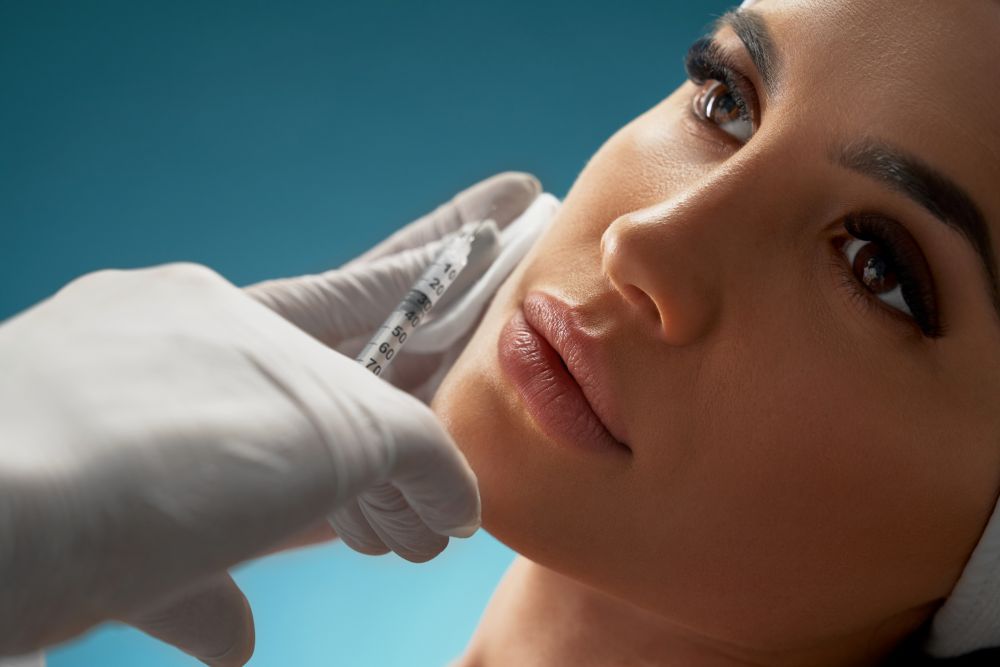
The provider cleanses the treatment area, applies numbing if needed, and injects Radiesse beneath the skin using a needle or cannula, following FDA labeling for subdermal placement.
- The product is injected in small linear threads or boluses, depending on the treatment area
- The provider massages the area to distribute the product evenly
- Total treatment time is generally under 30 to 45 minutes for most facial areas
Step 3: What Should You Expect Immediately After Treatment?
Immediately after treatment, mild swelling, redness, or tenderness at the injection site is common and generally temporary.
- Most patients resume normal daily activities the same day
- Ice or cool compresses may help manage initial swelling
- The provider gives specific aftercare instructions based on the treatment area
How Long Does Radiesse Filler Last?
Clinical literature indicates Radiesse results generally last around one year in the face, with some patients reporting longer-lasting improvement due to ongoing collagen production.
Factors that influence how long results last include:
- Treatment area, since facial folds, jawline, and hands may respond differently
- Amount of product used
- Individual metabolism and collagen response
- Patient activity level and skin quality
FDA labeling also notes that the safety of Radiesse has not been studied in controlled trials beyond one year in the hand or beyond three years in the face, which is a useful safety reference point for longer-term or repeat treatment planning.
What Results Can You Expect From Radiesse? (Before and After)
Radiesse produces results in two phases. Initial volume appears immediately after injection. Additional smoothing and firmness develop gradually over the following weeks to months as new collagen forms.
- Day of treatment: immediate volume from the gel carrier, along with some swelling
- Weeks 2 to 4: initial swelling resolves, revealing early results
- Months 2 to 6: gradual improvement in skin quality and contour as collagen builds
Individual results vary based on anatomy, skin quality, treatment area, and provider technique. A consultation with a licensed provider helps set realistic expectations for your specific case.
What Are the Risks and Side Effects of Radiesse?
Radiesse carries risks common to injectable dermal fillers. Most side effects are temporary. Rare but serious complications can occur, including unintended injection into a blood vessel.
Common, temporary side effects:
- Bruising, redness, and swelling
- Pain, tenderness, and itching
- Rash at the injection site
Less common or rare risks:
- Nodules or raised bumps beneath the skin
- Infection
- Allergic reaction
- Necrosis (tissue death) from unintended vascular injection
- Vision changes or stroke-like symptoms, in rare vascular complications
Who should use caution or avoid Radiesse:
- Patients with severe allergies or a history of anaphylaxis
- Patients with known hypersensitivity to filler components
- Patients with bleeding disorders, particularly for hand augmentation
Seek immediate medical attention for unusual pain, vision changes, or skin discoloration near the injection site during or shortly after treatment.
How Much Does Radiesse Filler Cost in Northridge and Los Angeles?
Radiesse pricing in the Northridge and greater Los Angeles market typically varies by syringe count and treatment area. Patients can expect a general range, though the final price depends on the individual treatment plan.
- A single syringe of Radiesse in the Los Angeles area can typically range from about 700 to 1,200 dollars.
- Treatment plans addressing larger areas, such as the jawline or hands, may require multiple syringes, which can increase the total cost.
- Package pricing or bundled treatment plans may reduce the average per-syringe cost for patients who need more than one syringe.
Exact pricing depends on the treatment area, the number of syringes needed, facility fees, and provider experience. A consultation offers the most accurate, personalized estimate.
Who Is a Good Candidate for Radiesse?
Good candidates for Radiesse are generally adults with moderate to severe facial folds, facial volume loss, jawline contour concerns, or hand volume loss who are in good general health.
- Adults 22 years of age or older, consistent with the FDA-approved age range for dermal fillers
- No history of severe allergies, anaphylaxis, or bleeding disorders
- Realistic expectations about gradual, natural-looking results
- Not pregnant or breastfeeding, since safety in these groups has not been established
Final candidacy is determined during an in-person consultation, where a provider reviews health history and treatment goals.
Frequently Asked Questions
Does Radiesse Hurt?
Most patients describe Radiesse injections as producing mild, brief discomfort rather than significant pain. Topical numbing cream or lidocaine mixed directly into the product can improve comfort. Sensitivity varies by treatment area and individual pain tolerance.
Can Radiesse Be Dissolved?
No. Radiesse is not reversible with hyaluronidase, the enzyme used to dissolve hyaluronic acid fillers. Because Radiesse is calcium hydroxylapatite rather than hyaluronic acid, it breaks down naturally through the body’s own metabolic process rather than through an enzyme injection. This makes precise technique and appropriate dosing especially important.
How Is Radiesse Different From Sculptra?
Radiesse and Sculptra are both collagen-stimulating fillers, but they use different materials and timelines. Radiesse uses calcium hydroxylapatite and provides some immediate volume at injection. Sculptra uses poly-L-lactic acid and works primarily through gradual collagen stimulation across several sessions, with less immediate volumizing effect.
How Many Syringes of Radiesse Will I Need?
The number of syringes needed depends on the treatment area, the severity of volume loss, and individual goals. Smaller areas, such as an isolated fold, may require a single syringe. Larger areas, such as the jawline or hands, often require more than one. A provider determines the appropriate amount during consultation.
Is Radiesse Safe?
Radiesse is an FDA-approved injectable device with a defined safety profile when administered by a trained provider. As with any injectable filler, risks exist, including rare but serious complications from unintended vascular injection. Reviewing health history and following provider guidance helps reduce risk. This is general information and not a substitute for a personalized medical evaluation.
How Do I Book a Radiesse Consultation in Northridge?
N2U Aesthetics is a physician-led practice in Northridge, California, under the direction of Dr. Masoud M. Azizad, MD, Board Certified in Internal Medicine, with nearly two decades of aesthetic medicine experience. Patients throughout the San Fernando Valley, including Sherman Oaks, Encino, Granada Hills, and Reseda, turn to the practice for individualized filler treatment planning.
- Physician-led practice operating in Northridge since 2007
- Individualized treatment planning based on facial anatomy and health history, not a standard package
- Consultation-based candidacy review before any Radiesse treatment is recommended
Schedule a consultation to find out whether Radiesse fits your goals.
Book appointmentSOURCES:
U.S. Food and Drug Administration. Radiesse Injectable Implant, Instructions for Use for the Dorsum of the Hand (PMA P050052/S049), 2015.
U.S. Food and Drug Administration. Dermal Fillers (Soft Tissue Fillers), content current as of July 2023.
National Library of Medicine, PubMed. Injectable Calcium Hydroxylapatite Microspheres (Radiesse).
Moradi A, Green JB, Kwok GP, Nichols K, Rivkin A. Guidelines for Optimal Patient Outcomes Using Calcium Hydroxylapatite for Jawline Contour. Aesthetic Surgery Journal Open Forum, 2023.
Medical Disclaimer
This content is for informational purposes only and is not a substitute for professional medical advice, diagnosis, or treatment. Aesthetic outcomes vary by individual. For personalized guidance, please book a consultation with Dr. Azizad at N2U Aesthetics by visiting n2uaesthetics.com