

Table of Contents
What These Fillers Have in Common
Juvederm: Hylacross and Vycross Technology
Belotero: Cohesive Polydensified Matrix (CPM) Technology
How to Actually Choose Between Them
Juvederm, Restylane, and Belotero are the three names you will hear most often when researching dermal fillers, and for good reason. All three are FDA-approved hyaluronic acid fillers with a long track record of safe use in the United States. But they are not interchangeable. Each brand uses different manufacturing technology that changes how the gel behaves once injected, which is exactly why an experienced injector will often reach for a different product depending on where on the face they are treating.
This guide breaks down what actually separates these three fillers, based on their FDA approval history and the manufacturing science behind each one, so you can have an informed conversation with your provider instead of just picking a brand name you have heard before.
Key Takeaways
- Juvederm, Restylane, and Belotero are all FDA-approved hyaluronic acid fillers, but each uses different cross-linking technology, which changes how the gel feels and where it performs best.
- Restylane (NASHA technology) tends to hold structure well and is commonly used for lips and moderate volume correction.
- Juvederm (Hylacross and Vycross technology) produces a smooth, cohesive gel often used for volumizing and contouring larger areas like the cheeks.
- Belotero (CPM technology) integrates very seamlessly into thin skin, making it a common choice for fine lines and delicate areas.
- All three typically last 6 to 12 months and are reversible with hyaluronidase if a correction is needed.
- The “best” filler is determined by treatment area and goals, not by brand reputation alone.
What These Fillers Have in Common
Before getting into the differences, it helps to understand the shared foundation. Juvederm, Restylane, and Belotero are all made from hyaluronic acid (HA), a sugar molecule that occurs naturally in the skin and connective tissue. To make HA last long enough to be useful as a filler, manufacturers chemically cross-link the HA molecules together, since natural, non-cross-linked HA breaks down in the body within days.
All three brands are regulated by the FDA as Class III medical devices, and all three are reversible, meaning an enzyme called hyaluronidase can dissolve the filler if a correction, adjustment, or complication requires it. This reversibility is one of the biggest safety advantages HA fillers have over older or permanent filler materials.
Where they differ is in the specific cross-linking process each manufacturer uses, and that difference is not just a marketing distinction. It changes the gel’s firmness, flexibility, and how it integrates into different tissue depths.
Restylane: NASHA Technology
Restylane was the first hyaluronic acid filler to receive FDA approval in the United States, in December 2003. It uses a manufacturing process called NASHA (Non-Animal Stabilized Hyaluronic Acid), which produces a particle-based gel. Depending on the specific Restylane product, particle size and density are adjusted to create formulas ranging from soft and pliable to firm and structural.
This is why Restylane comes in multiple variants rather than a single formula. N2U Aesthetics offers several Restylane products, allowing the provider to match gel firmness to the treatment goal, whether that is subtle lip enhancement or more structural volume correction elsewhere on the face.
Because NASHA gel tends to hold its shape well, Restylane is frequently chosen for the lips and for areas where the injector wants precise, controlled volume rather than a very soft blend into surrounding tissue.
Juvederm: Hylacross and Vycross Technology
Juvederm received its first FDA approval in 2006 and originally used a technology called Hylacross, which creates a smooth, uniform, monophasic gel rather than a particle-based one. Newer Juvederm formulations, including Voluma, Volbella, and Vollure, use a technology called Vycross, which blends high molecular weight and low molecular weight HA together. This produces a gel that is both cohesive and more malleable, which is part of why Vycross-based products are often used for larger volumizing work, such as restoring cheek volume.
N2U Aesthetics offers Juvederm Voluma, which is specifically designed to add structural volume to the cheek area and is FDA-approved for adults over 21. Results from Voluma are often reported to last longer than standard HA fillers, in some cases 18 to 24 months, due to its denser cross-linking.
Belotero: Cohesive Polydensified Matrix (CPM) Technology
Belotero received FDA approval in November 2011 and uses a different approach entirely, called Cohesive Polydensified Matrix, or CPM. This process cross-links the HA at varying densities within the same gel, which allows Belotero to integrate very smoothly into thin or delicate tissue rather than sitting as a more defined, structured volume.
This is why Belotero is frequently associated with fine lines, superficial wrinkles, and thin-skin areas like around the lips or under the eyes, where a heavier, more structural gel could look or feel unnatural. N2U Aesthetics offers Belotero specifically for patients seeking subtle, refined correction rather than dramatic volume change.
READ MORE: Botox vs. Dysport: Which One Actually Works Better for You?
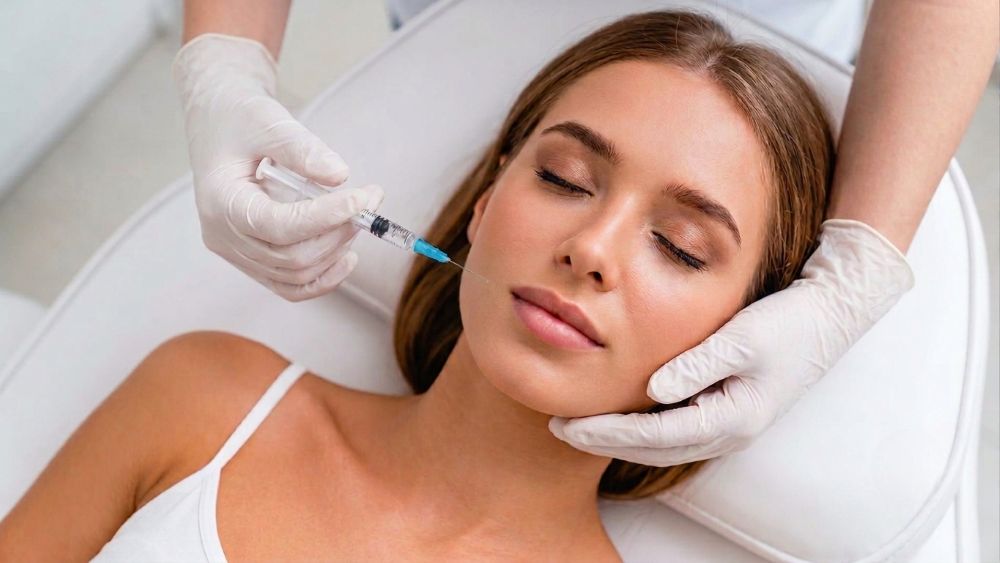
Side-by-Side Comparison
| Restylane | Juvederm | Belotero | |
| Technology | NASHA (particle-based) | Hylacross / Vycross | CPM (cohesive polydensified matrix) |
| FDA approved | 2003 | 2006 | 2011 |
| Best suited for | Lips, moderate volume, structure | Cheeks, larger volume, contouring | Fine lines, thin skin, delicate areas |
| Typical duration | 6 to 18 months, varies by product | 6 to 24 months, varies by product | 6 to 12 months |
| Feel in tissue | Firmer, more particle structure | Smooth, cohesive | Very soft, blends seamlessly |
Duration ranges above reflect the range across each brand’s full product line rather than a single formula, since both Restylane and Juvederm include multiple products built for different levels of structure and longevity.
How to Actually Choose Between Them
The honest answer is that the best filler is determined by where on the face you are being treated and what result you want, not by which brand has the most name recognition. A provider who only offers one brand is limited to treating every area with the same tool. A provider who offers all three, as N2U Aesthetics does through its full dermal filler menu, can select the product that actually matches the treatment area.
As a general pattern based on how each technology behaves:
- Lips and subtle enhancement: Restylane’s particle-based structure or Belotero’s soft integration are both common choices, depending on whether more definition or more blend is desired.
- Cheek volume and contouring: Juvederm Voluma’s denser Vycross formulation is built specifically for this.
- Fine lines and thin-skin areas: Belotero’s CPM technology is designed to avoid the lumpy or visible appearance that a firmer gel can create in delicate tissue.
- Nasolabial folds and moderate-to-severe wrinkles: All three brands have FDA-approved products for this indication, and the choice often comes down to injector preference and how the gel behaves during injection.
This is also where combination treatment plans come in. It is common for a single visit to use more than one filler brand across different areas of the face, since no single product is designed to do everything well.
Cost Considerations
Pricing for all three brands is typically calculated per syringe rather than as a flat treatment fee, and cost varies based on the specific product within each line, the number of syringes needed, and the provider’s experience. Denser, longer-lasting formulations like Juvederm Voluma are generally priced differently than lighter products like Restylane Silk or Belotero Balance, reflecting differences in manufacturing and expected longevity.
Because these are medical-grade devices requiring precise injection technique, cost should never be the only factor in choosing a provider. An inexperienced injection in a delicate area like the tear trough or lips is far more likely to require a corrective visit, which adds cost and downtime that a properly planned treatment would have avoided.
Safety and Aftercare
All three fillers carry similar general risks common to HA injectables, including temporary swelling, bruising, and tenderness at the injection site. More significant risks, such as vascular occlusion, are rare but are a key reason injector experience and anatomical knowledge matter more than brand choice alone.
Aftercare guidance is largely consistent across all three products:
- Apply ice intermittently for the first few hours to reduce swelling
- Avoid strenuous exercise and excessive heat for about 24 hours
- Avoid additional facial treatments in the treated area for one to two weeks
- Stay hydrated, since HA draws in water as part of how it creates volume
Because all three are reversible with hyaluronidase, patients have a safety net if a result needs to be softened or corrected, which is not the case with older, non-HA filler materials.
READ MORE: Lip Filler: Cost, Before and After, and How Long It Actually Lasts
Why Choose N2U Aesthetics
N2U Aesthetics is led by Dr. Masoud M. Azizad, a board-certified physician with a background in internal medicine and aesthetics, serving patients throughout Northridge and the greater Los Angeles area. Because N2U offers Restylane, Juvederm Voluma, and Belotero, along with Radiesse and Botox for a more complete facial treatment plan, your provider can build a plan around your anatomy rather than fitting your face to whatever single product a practice happens to carry.
To find out which filler is the right match for your goals, schedule a consultation with N2U Aesthetics.
OR
Call Us
Frequently Asked Questions
Is Juvederm or Restylane better?
Neither is universally better. Juvederm’s Vycross formulations are often preferred for larger volumizing work like the cheeks, while Restylane’s particle-based structure is commonly used for lips and areas needing defined structure.
Is Belotero good for lips?
Belotero’s CPM technology allows it to blend very smoothly into thin tissue, which is why it is often used for subtle lip and fine-line correction, though Restylane is also a common choice for lips depending on the desired look.
How long does each filler last?
Most HA fillers last 6 to 12 months, though specific products within the Juvederm and Restylane lines, such as Voluma, are designed to last longer, sometimes 18 to 24 months.
Can these fillers be combined in one treatment?
Yes. It is common to use more than one filler brand in a single visit, since each is manufactured to perform differently depending on the treatment area.
Are these fillers reversible?
Yes. Juvederm, Restylane, and Belotero are all hyaluronic acid based and can be dissolved with hyaluronidase if a correction is needed.
This article is for general informational purposes only and is not a substitute for professional medical advice, diagnosis, or treatment. The right filler for you depends on your anatomy, goals, and treatment area, and should be determined with a licensed medical provider during an in-person consultation.
Sources
- American Society of Plastic Surgeons (ASPS), FDA-Approved Aesthetic Treatments vs. Off-Label Options: general context on FDA approval status in aesthetic medicine
- U.S. Food and Drug Administration, FDA-Approved Dermal Fillers: HA filler classification, general duration, and reversibility
- U.S. FDA Premarket Approval, Restylane (PMA P020023): Restylane FDA approval date and indication
- U.S. FDA Premarket Approval, Juvederm (PMA P050047): Juvederm FDA approval date and indicationU.S. FDA Premarket Approval, Belotero Balance (PMA P090016): Belotero FDA approval date and indicationAllergan Aesthetics / AbbVie, FDA Approval Announcement for Juvederm Voluma XC: Voluma duration and cheek augmentation approval
- Ye, Q., et al., Clinical Perspectives on the Injectability of Cross-Linked Hyaluronic Acid Dermal Fillers, PMC (National Institutes of Health): NASHA, Vycross, and CPM technology and gel behavior comparison
You May Also Like: Restylane® vs Juvéderm® 2026: Differences, Results & Cost Comparison