
Table of Contents
What Are PRP Injections for Hair Loss?
How Much Do PRP Injections for Hair Loss Cost?
How Do I Find PRP Injections for Hair Loss Near Me in Northridge?
What Happens During a PRP Hair Restoration Treatment?
Who Is a Good Candidate for PRP Hair Restoration?
What Are the Risks and Side Effects of PRP for Hair Loss?
Where Can I Get PRP Hair Restoration in Northridge?
Hair thinning raises two practical questions for most patients: does platelet-rich plasma (PRP) actually work, and what does a real treatment plan cost. This guide answers both using peer-reviewed research and current market pricing data, then explains how PRP is delivered at a Northridge medical spa.
Quick Summary: Key Takeaways
- PRP therapy: patient’s own blood, centrifuge-separated, growth-factor-rich plasma injected into the scalp
- Research support: multiple peer-reviewed studies show increased hair density in androgenetic alopecia patients
- Cost range: roughly 400 to 1,500 dollars per session; full initial series often 1,500 to 4,500 dollars
- Best candidates: early to moderate thinning, not total baldness or fully dormant follicles
- Availability: offered at N2U Aesthetics in Northridge, serving the San Fernando Valley
What Are PRP Injections for Hair Loss?
PRP injections use a patient’s own blood plasma, concentrated with platelets and growth factors, injected directly into thinning areas of the scalp to support existing follicle activity.
Platelet-rich plasma therapy follows three clinical steps:
- Blood draw. A small amount of blood is drawn from the patient’s arm, similar to a routine lab test.
- Centrifuge separation. The sample spins in a centrifuge, separating red blood cells from the platelet-rich plasma layer.
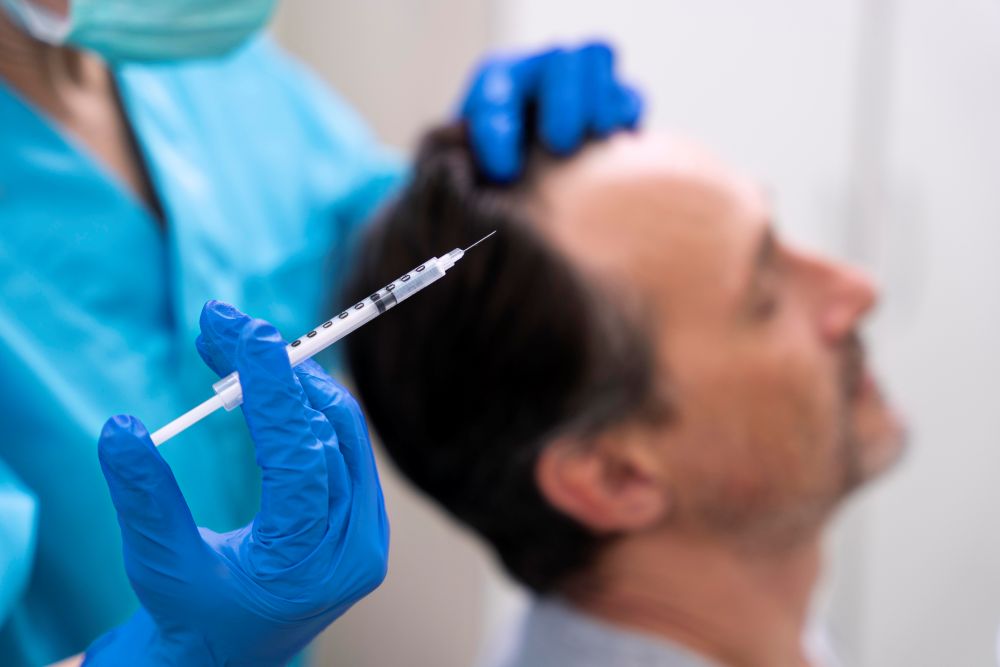
- Scalp injection. The concentrated plasma is injected into targeted areas of thinning or shedding hair.
The procedure does not use synthetic drugs or donor tissue. Platelet-rich plasma comes entirely from the patient’s own blood, which is part of why providers describe PRP as a biologic approach rather than a pharmaceutical one.
How Does PRP Stimulate Hair Growth?
Blood platelets release growth factors that support blood supply and cellular activity around hair follicles, which may help sustain follicles already in a growth phase.
Blood platelets contain proteins including platelet-derived growth factor and vascular endothelial growth factor. Researchers studying platelet-rich plasma injections observed increased epidermal thickness and a greater number of hair follicles in treated scalp tissue compared to baseline measurements. The same study reported measurable increases in follicular bulge cell activity and small blood vessel formation around treated follicles.
Growth factor activity does not create new hair follicles. Existing follicles that are miniaturizing or entering a resting phase are the primary target of this mechanism.
Does PRP Work for Hair Loss?
Clinical research shows measurable improvement in hair density for many patients with androgenetic alopecia, though results vary by individual and PRP is not effective for every type or stage of hair loss.
A 2018 study in the International Journal of Women’s Dermatology, reported by Harvard Health Publishing, found that platelet-rich plasma therapy is beneficial for treating androgenetic alopecia, a hormonally and genetically driven form of hair loss affecting up to 35 percent of women by age 60. The standard clinical protocol draws blood, separates plasma in a centrifuge, and injects the concentrate into hair follicles.
Who tends to respond and who may not:
| Patient Profile | Typical Response |
| Early to moderate androgenetic alopecia (male or female pattern thinning) | Often shows measurable improvement in hair density over a full session series |
| Recently thinning areas with visible fine or miniaturized hair | Generally more responsive than long-dormant areas |
| Alopecia areata (patchy autoimmune hair loss) | Some research shows benefit, though evidence is less extensive than for pattern hair loss |
| Fully bald scalp with no active follicles | Limited to no expected benefit, since PRP supports existing follicles rather than creating new ones |
| Hair loss from unmanaged medical conditions | Requires medical evaluation before any cosmetic hair treatment is considered |
What Does the Research Say About PRP for Hair Restoration?
Multiple peer-reviewed studies report increased hair density and follicle activity after a series of PRP injections, though researchers note that individual response varies and standardized protocols are still developing.
A controlled clinical study measured a mean increase of 18 hairs in the treated target area and a mean increase in total hair density of 27.7 hairs per square centimeter after three monthly PRP sessions, compared with a placebo-treated control group. Researchers describe this evidence as supportive of PRP as a treatment option, while also calling for larger, more standardized studies.
Individual results depend on the severity of thinning, the number of sessions completed, and overall scalp and follicle health.
How Much Do PRP Injections for Hair Loss Cost?
A single PRP session for hair loss in the Northridge and greater Los Angeles area typically ranges from about 400 to 1,500 dollars, and a full initial series often ranges from about 1,500 to 4,500 dollars.
Pricing reflects specialized processing equipment, provider time, and the number of sessions most treatment plans require. General cost factors include:
- Number of sessions. Most initial treatment plans involve three to four sessions spaced several weeks apart.
- Treatment area size. A broader area of thinning requires more plasma volume and injection time.
- Provider experience. Physician-led practices with advanced equipment may price differently than walk-in clinics.
- Maintenance schedule. Many patients return for occasional maintenance sessions after the initial series.
Exact pricing depends on the extent of thinning, the number of sessions recommended, facility fees, and provider experience. The most accurate price for an individual treatment plan comes from an in-person consultation.
What Factors Affect the Total Price of PRP Treatment?
Total cost is driven primarily by session count, scalp coverage area, and whether maintenance visits are included in the plan.
- Combination with other hair treatments, such as topical therapies, can add to total cost
- Geographic market rates vary between Southern California regions
- Consultation and evaluation fees are sometimes bundled into package pricing
- Follow-up maintenance sessions are typically priced separately from the initial series
How Do I Find PRP Injections for Hair Loss Near Me in Northridge?
N2U Aesthetics offers PRP hair restoration from its Northridge office, serving patients across the San Fernando Valley.
N2U Aesthetics is located at 18433 Roscoe Blvd, Suite 203, Northridge, CA 91325, and can be reached at (818) 721-9004. Patients travel to this location from across the following areas:
- Reseda
- Porter Ranch
- Chatsworth
- Granada Hills
- Sherman Oaks
- Encino
- Greater Los Angeles
A physician-led consultation at this location evaluates scalp condition, hair loss pattern, and candidacy before any PRP hair restoration plan is recommended.
What Happens During a PRP Hair Restoration Treatment?
A PRP hair restoration visit follows a defined sequence, from initial blood draw through scalp injection, typically completed within a single appointment.
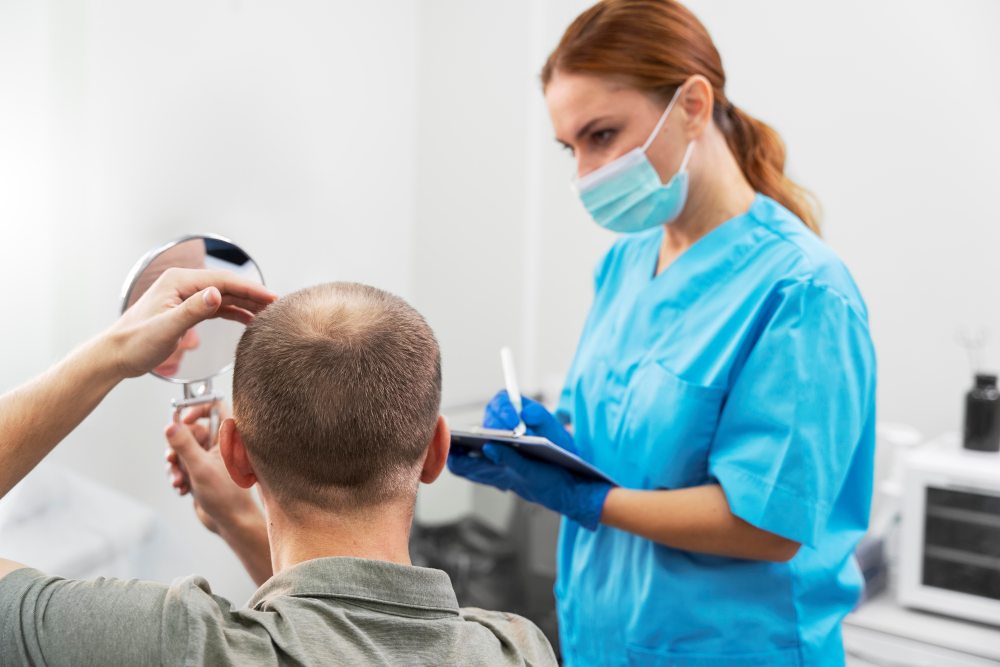
- Consultation and scalp assessment. The provider reviews hair loss pattern, scalp health, and medical history.
- Blood draw. A standard blood sample is collected from the arm.
- Centrifuge processing. The sample is spun to separate and concentrate the platelet-rich plasma.
- Scalp preparation. The treatment area is cleansed, and topical numbing may be applied for comfort.
- Targeted injections. The concentrated plasma is injected into areas of thinning across the scalp.
- Immediate aftercare instructions. The provider explains what to expect in the hours and days following treatment.
How Soon Can I Return to Normal Activity After a PRP Scalp Treatment?
Most patients resume typical daily activities the same day, with a few short-term precautions during the first 24 to 48 hours.
- Avoid washing hair or applying hair products the same day as treatment
- Avoid strenuous exercise or heavy sweating for approximately 24 hours
- Apply sun protection to the scalp if sun exposure is unavoidable
- Follow any additional aftercare instructions specific to the individual treatment plan
Mild scalp tenderness, redness, or swelling at injection sites is common and typically resolves within a few days.
Who Is a Good Candidate for PRP Hair Restoration?
Candidacy for PRP hair restoration depends on the pattern and stage of hair loss, overall health, and realistic goals for hair density improvement.
General candidacy factors include:
- Early to moderate thinning rather than complete baldness in the treatment area
- Generally good health with no active scalp infection or bleeding disorder
- Realistic expectations about gradual density improvement rather than full regrowth
- Willingness to complete a full session series rather than a single treatment
A licensed provider determines final candidacy after reviewing an individual’s health history and scalp condition during an in-person consultation. This content is general information and does not replace that evaluation.
What Are the Risks and Side Effects of PRP for Hair Loss?
PRP for hair loss carries generally mild, temporary side effects, though every injectable procedure involves some risk that should be reviewed with a provider.
Commonly reported effects:
- Mild soreness or tenderness at injection sites
- Temporary scalp redness or swelling
- Mild headache following treatment
Less common effects:
- Infection at injection sites
- Prolonged swelling or bruising
- No noticeable improvement in hair density, since individual response varies
PRP is not appropriate for patients with certain blood disorders, active scalp infections, or specific medical conditions. A provider reviews health history before treatment to help determine whether PRP is an appropriate option.
Where Can I Get PRP Hair Restoration in Northridge?
N2U Aesthetics is a physician-led medical spa serving Northridge and the San Fernando Valley since 2007, under the direction of Dr. Masoud M. Azizad, MD, Board Certified in Internal Medicine, with nearly two decades of aesthetic medicine experience.
- Physician-reviewed treatment plans built around individual scalp assessment rather than a standard package
- On-site blood processing and injection completed in a single Northridge office visit
- Consultation-first approach that evaluates candidacy before recommending any session series
Patients considering PRP for hair loss can call (818) 721-9004 or visit n2uaesthetics.com to schedule a consultation and review a personalized treatment plan.
Frequently Asked Questions
Is PRP for Hair Loss FDA-Approved?
The blood-processing devices and centrifuge kits used to prepare platelet-rich plasma are cleared by the U.S. Food and Drug Administration for processing blood components. Injecting plasma into the scalp for hair restoration is a clinical application of that processed material rather than a separately FDA-approved drug indication, so candidacy and technique are determined by the treating provider.
How Many PRP Sessions Will I Need?
Most initial treatment plans involve three to four sessions spaced several weeks apart, followed by occasional maintenance visits. The exact number depends on the severity of thinning and how the scalp responds, which a provider determines during consultation.
Can PRP Be Combined With Other Hair Restoration Treatments?
Some patients combine PRP with other hair care approaches as part of a broader treatment plan. Whether combination treatment is appropriate depends on individual goals and health history, which a provider can review during consultation.
Is PRP Painful?
Most patients describe PRP scalp injections as causing mild discomfort rather than significant pain. Topical numbing options can improve comfort during treatment, and sensitivity varies by individual.
How Long Do PRP Results Last?
Results from a full PRP session series can hold for an extended period in many patients, though hair loss is often an ongoing process influenced by genetics, hormones, and aging. Many patients schedule periodic maintenance sessions to help sustain results over time.
Book appointmentREAD MORE: What Age Should You Start Botox? Expert Recommendations by Decade