
Table of Contents
What Hair Restoration Actually Means
Why Hair Loss Happens, and Why Diagnosis Comes First
How the Main Hair Restoration Methods Work
Hair Restoration Methods at a Glance
What the Hair Restoration Process Typically Looks Like, Step by Step
Who Is a Candidate for Hair Restoration
Results, Timelines, and Realistic Expectations
Risks and Side Effects to Know About
Start With a Consultation That Looks at the Whole Picture
Key Takeaways
- Hair restoration is an umbrella term covering medical, regenerative, energy-based, and surgical approaches.
- Identifying the cause of hair loss matters before choosing a treatment.
- Non-surgical options (medications, PRP, lasers) work to maintain and stimulate existing hair.
- Surgical transplants relocate healthy follicles to thinning areas of the scalp.
- Most methods take 3 to 12 months to produce visible change, and maintenance is usually ongoing.
You spot a widening part in a photo. You notice more strands in the shower drain. Your hairline looks different than it did two years ago. These small moments are usually what bring people to start researching how hair restoration actually works.
Here is the part most articles skip: hair restoration is not one procedure. It is a category of treatments, and the right one depends on what is causing the hair loss in the first place.
This guide breaks down the main methods, how each one works, what results to expect, and what to ask about before treatment.
What Hair Restoration Actually Means
Hair restoration refers to the medical and aesthetic field focused on slowing, stopping, or reversing hair loss. According to the American Academy of Dermatology, hereditary hair loss is the most common form of hair loss in men and women, affecting millions of people, making it one of the most common reasons patients seek consultation for scalp and hair concerns.
Treatments generally fall into four broad categories:
- Medical therapy: Topical and oral medications such as minoxidil and finasteride.
- Regenerative injectables: Platelet-rich plasma (PRP) and similar growth-factor treatments.
- Energy-based devices: Low-level laser therapy (LLLT) and microneedling adjuncts.
- Surgical transplant: Follicular unit extraction (FUE) and follicular unit transplantation (FUT).
Each works through a different mechanism. Each suits a different type of hair loss. That is why understanding how each option works is the first step before deciding what to pursue.
Why Hair Loss Happens, and Why Diagnosis Comes First
Hair loss has many possible causes, and they are not treated the same way.
Common forms include:
- Androgenetic alopecia: Genetic male and female pattern hair loss driven largely by dihydrotestosterone (DHT).
- Telogen effluvium: Diffuse shedding triggered by stress, illness, postpartum hormonal shifts, medication changes, or rapid weight loss.
- Medical and nutritional contributors: Thyroid disorders, iron deficiency, low vitamin D, and certain hormonal imbalances.
- Traction and scarring alopecias: Loss caused by tension on the hair (tight hairstyles) or inflammatory scalp conditions.
Why Treating Without a Diagnosis Often Disappoints
Starting PRP will not correct an iron deficiency. Minoxidil will not address an untreated thyroid problem. Many patients spend months on a treatment before realizing the underlying driver was something else. A scalp exam, a thorough medical history, and, when indicated, basic bloodwork, are the foundation of any sound hair restoration plan.
How the Main Hair Restoration Methods Work
This is the core of the question. Each method targets the hair follicle through a different mechanism.
Medical Therapy: Minoxidil and Finasteride
Minoxidil is a topical vasodilator that prolongs the active growth phase (anagen) of the hair cycle. The U.S. Food and Drug Administration first approved minoxidil for hair loss in 1988 for men, and in 1991 for women. It is available over the counter in topical form and by prescription in oral form for select patients.
Finasteride is an oral medication that blocks 5-alpha-reductase, the enzyme that converts testosterone to DHT. By lowering scalp DHT, finasteride can slow follicle miniaturization in many men with pattern hair loss. It is FDA-approved for male androgenetic alopecia and is sometimes prescribed off-label for women under physician supervision. Finasteride is contraindicated in pregnancy.
Platelet-Rich Plasma (PRP) Injections
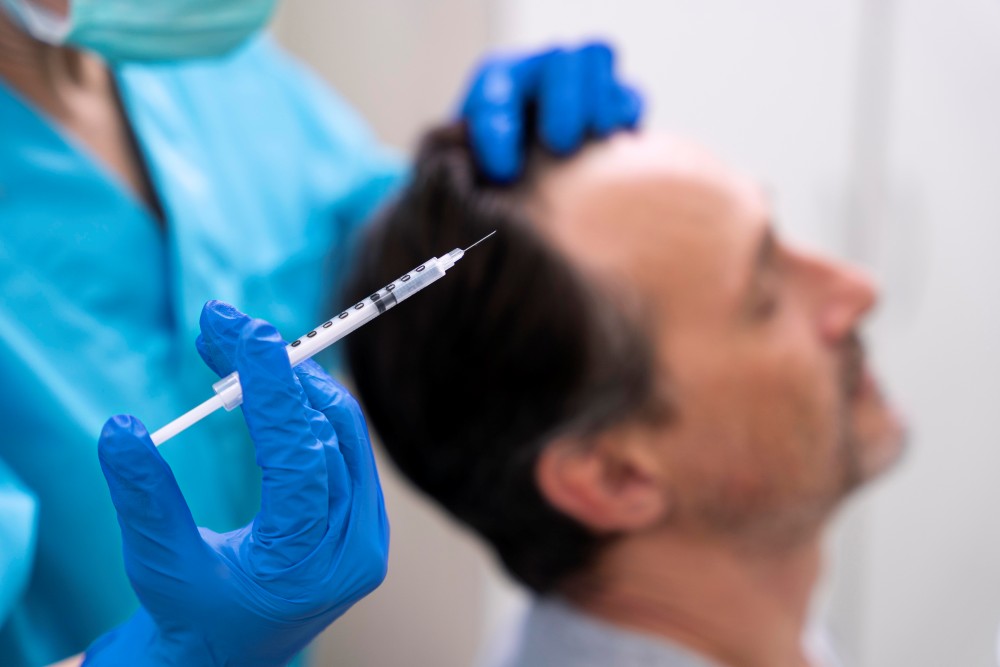
PRP starts with a small blood draw. The blood is processed in a centrifuge that separates and concentrates platelets, which are rich in growth factors thought to stimulate dormant follicles and prolong the growth phase. The concentrated plasma is then injected into the scalp in the areas of thinning.
A typical PRP protocol involves an initial series of treatments spaced roughly four to six weeks apart, followed by maintenance sessions. PRP centrifuge systems are FDA-cleared as devices; the use of PRP specifically for hair loss is considered off-label, though clinical research continues to support its role for early to moderate pattern thinning.
Low-Level Laser Therapy (LLLT)
LLLT uses red-light wavelengths, typically in the 650 to 670 nanometre range, to stimulate cellular activity in the hair follicle. Several at-home laser caps and combs are FDA-cleared as devices for promoting hair growth, and in-office laser panels work on the same principle. LLLT is most often used as an adjunct rather than a stand-alone solution, particularly for mild thinning.
Microneedling and Topical Adjuncts
Microneedling creates controlled micro-injuries in the scalp that trigger the body’s natural wound-healing response and improve absorption of topical treatments. It is frequently combined with topical minoxidil or PRP to enhance overall outcomes.
Hair Transplant Surgery: FUE and FUT
When non-surgical methods are not enough, surgical transplant can move healthy follicles from a donor area (usually the back and sides of the scalp) to thinning areas.
- Follicular Unit Extraction (FUE): Individual follicular units are harvested one at a time using a small punch tool. FUE leaves tiny dot-like scars that are typically less visible.
- Follicular Unit Transplantation (FUT): A strip of donor scalp is surgically removed and dissected into individual grafts under microscopes. FUT leaves a linear scar but can transplant a high graft count in a single session.
Hair transplant surgery is performed by hair restoration surgeons, not at medical spas. Strong transplant candidates are generally referred to a qualified surgical specialist.
Hair Restoration Methods at a Glance
| Method | How It Works | Best Suited For | Typical Onset | Maintenance |
| Minoxidil | Prolongs growth phase | Early to moderate thinning | 3 to 6 months | Ongoing daily use |
| Finasteride | Blocks DHT | Male pattern loss | 3 to 6 months | Ongoing daily use |
| PRP | Growth-factor stimulation | Early to moderate thinning | 3 to 6 months | Maintenance sessions |
| LLLT | Light energy stimulation | Mild thinning, adjunct | 4 to 6 months | Ongoing use |
| Microneedling | Stimulates healing, boosts absorption | Adjunct to topicals | 3 to 6 months | Periodic sessions |
| FUE / FUT | Surgical follicle relocation | Defined balding patterns | 6 to 12 months | Generally one-time |
What the Hair Restoration Process Typically Looks Like, Step by Step
A reputable hair restoration plan does not start with a product. It starts with an evaluation. Here is what a careful, physician-led process generally involves.
Step 1: Consultation and Scalp Evaluation
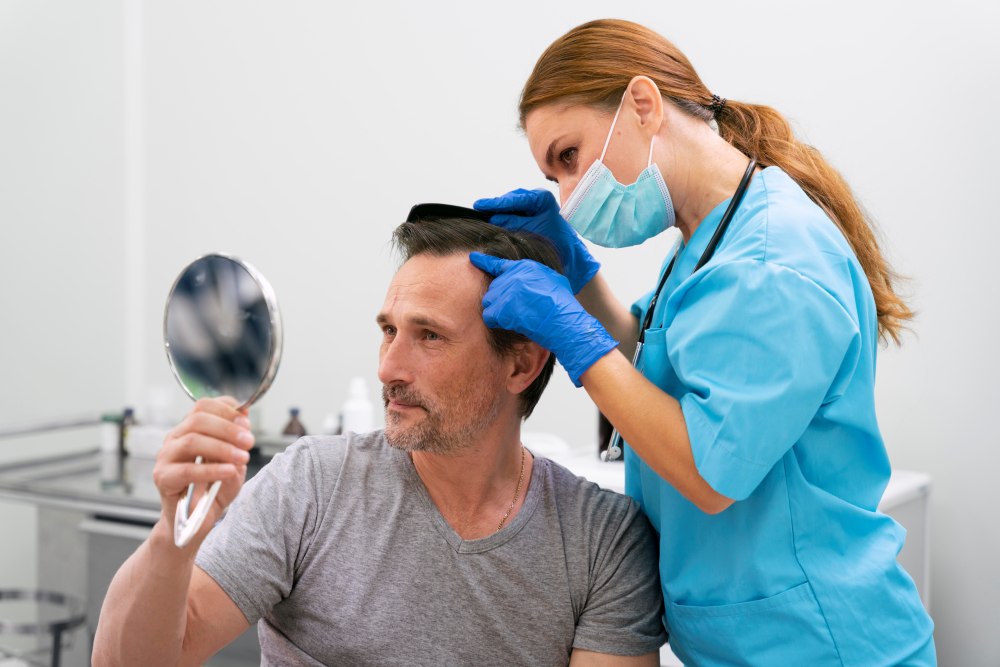
A thorough patient history, review of medications, family history of hair loss, and a visual or trichoscopic exam of the scalp.
Step 2: Lab Work When Indicated
For diffuse shedding or atypical presentation, bloodwork can rule out thyroid disorders, iron deficiency, vitamin D deficiency, and hormonal imbalances.
Step 3: Diagnosis and Personalized Treatment Plan
The physician matches the most likely cause with the most appropriate option (or combination of options) and discusses realistic outcomes and timelines.
Step 4: Initial Treatment Phase
This may involve starting a prescription, beginning a PRP series, recommending an at-home laser device, or referring to a surgical specialist for transplant.
Step 5: Reassessment and Maintenance
Follow-up at three and six months allows the team to track response, adjust the plan, and plan ongoing maintenance.
Who Is a Candidate for Hair Restoration
Hair restoration is not one-size-fits-all. Generally good candidates include patients with early to moderate pattern hair loss, those with a healthy donor area (especially for surgical candidates), patients who can commit to maintenance, and anyone with realistic expectations and stable overall health.
Hair restoration may not be the best option for patients with active scarring alopecias requiring medical treatment first, those who are pregnant or breastfeeding (for certain medications), or anyone expecting an overnight, dramatic change. A physician-led evaluation is the most reliable way to determine candidacy.
Results, Timelines, and Realistic Expectations
The hair growth cycle is months long, so hair restoration is a patience game.
- 0 to 3 months: Stabilization, sometimes with a temporary “shedding” phase, especially with minoxidil.
- 3 to 6 months: Early regrowth and reduced shedding.
- 6 to 12 months: Clearer outcomes and a better sense of long-term response.
For non-surgical methods, stopping treatment usually means losing gains over time. Surgical transplants relocate hair that typically remains, but the surrounding native hair can continue to thin without medical maintenance.
Risks and Side Effects to Know About
No hair restoration option is risk-free. Here is what is generally known about the most common methods.
- Minoxidil: Scalp irritation, temporary increase in shedding when starting, and rarely, unwanted facial hair growth in women.
- Finasteride: Sexual side effects in a small percentage of users, mood changes in rare cases, and contraindication in pregnancy.
- PRP: Injection-site bruising, swelling, tenderness, and occasional headache.
- LLLT: Generally well-tolerated; rare scalp irritation.
- Hair transplant surgery: Surgical risks, temporary “shock loss” of nearby hair, scarring (more visible with FUT), infection, and graft failure.
Any new or worsening side effect, persistent pain, signs of infection, or unexpected hair change should be reviewed with the prescribing or treating physician.
Frequently Asked Questions
Does hair restoration really work?
For many patients, yes. Medical therapy and PRP have clinical support for early to moderate pattern hair loss, and surgical transplant can restore density in well-defined balding areas. Outcomes vary based on the underlying cause, the method chosen, adherence to the plan, and individual biology.
How long does it take for hair restoration to show results?
Most non-surgical methods take 3 to 6 months for early visible change and up to 12 months for a clearer picture. Hair transplant results continue to develop over 6 to 12 months as transplanted follicles enter their new growth cycle.
Is hair restoration permanent?
Surgical hair transplants relocate follicles that generally continue to grow long-term, but native hair around them can keep thinning. Non-surgical methods require ongoing use; stopping usually leads to a gradual loss of gains.
Is hair restoration painful?
Most non-surgical methods cause mild to moderate discomfort. PRP involves a series of small injections, typically with topical numbing. Surgical transplant is performed under local anaesthetic and is generally well-tolerated, though patients may have post-procedure soreness for several days.
How do I know which hair restoration method is right for me?
A physician-led consultation with a scalp exam (and lab work when indicated) is the most reliable starting point. The goal is to identify the cause first, then match it to the right approach.
Start With a Consultation That Looks at the Whole Picture
Hair restoration works best when it begins with understanding why hair is changing, not just treating it as it is. A careful evaluation, an honest conversation about realistic outcomes, and a plan tailored to the individual tend to outperform any single product or quick fix.
If you are exploring your options in the San Fernando Valley, the team at N2U Aesthetics offers physician-led aesthetic consultations grounded in nearly two decades of personalized, evidence-based care.
Call us today to schedule a consultation and start with a clearer plan.
Schedule Your Consultation TodayThis article is for informational purposes only and is not a substitute for professional medical advice, diagnosis, or treatment. Hair restoration outcomes vary based on the underlying cause, the method used, and individual health factors. For personalized guidance, please book a consultation with N2U Aesthetics.