
A hair transplant takes time to produce visible results. Early changes can begin within the first few months, while most patients see more noticeable results between six and nine months. For some patients, it may take about 12 months to see the full effect.
Understanding the typical hair transplant timeline can help you set realistic expectations and recognize what may be part of normal recovery. Individual healing and results vary, so instructions from your treating physician should always take priority over general timelines.
Key Takeaways
- Transplanted hairs commonly shed within the first several weeks after surgery, which can be a normal part of recovery.
- Most patients see results between six and nine months, although some may need approximately 12 months before the result can be fully evaluated.
- FUE and FUT are established methods of harvesting donor hair, and both can produce scarring.
- Medication changes before surgery should be determined by your medical team. Patients should not independently stop prescription medicines, including blood thinners.
- Hair transplant surgery carries risks such as bleeding, infection, scarring, and poor growth of transplanted grafts.
- Hair loss can continue in untreated areas after a transplant, so long-term treatment planning may still be important.
Before the Procedure: Consultation, Medical Preparation, and Cost
What Happens During a Hair Transplant Consultation?
A hair transplant consultation helps determine whether surgery is appropriate for your pattern of hair loss, available donor hair, medical history, and cosmetic goals.
According to the American Academy of Dermatology, a patient generally needs enough healthy donor hair to transplant into the thinning area, as well as the ability to grow hair in the area receiving the transplant.
During a consultation, a provider may evaluate:
- Your pattern and progression of hair loss
- The density and quality of potential donor hair
- Your medical and surgical history
- Prescription medications, over-the-counter products, and supplements
- Previous hair-loss treatments
- Scalp conditions or previous procedures
- Your expectations for hairline shape, coverage, and density
Not everyone is an appropriate candidate for hair transplantation. Limited donor hair, certain health or scalp conditions, continued progression of hair loss, or expectations that cannot realistically be achieved can affect whether surgery is recommended.
At N2U Aesthetics in Northridge, California, the practice is led by Dr. Masoud M. Azizad, MD. According to the clinic’s published biography, Dr. Azizad is board certified in internal medicine and has experience in aesthetic medicine.
It is important for patients considering hair restoration surgery to ask specifically about the training, experience, licensing, and role of the professional who will perform each surgical part of the procedure. The International Society of Hair Restoration Surgery emphasizes the importance of qualified physicians performing the medical and surgical aspects of hair transplantation.
How Should You Prepare for a Hair Transplant?
Preoperative instructions vary based on your health history, medications, transplant technique, and the physician’s surgical protocol.
Before surgery, provide your medical team with a complete list of prescription medications, over-the-counter medicines, vitamins, supplements, and herbal products.
The American College of Surgeons advises patients to discuss medications that may affect surgery, including anticoagulants, antiplatelet medications, NSAIDs, diabetes medications, and certain supplements.
Do not stop prescription blood thinners, antiplatelet medications, or other prescribed treatments on your own. Your surgeon and, when appropriate, the clinician who prescribed the medication should determine whether any change is needed.
Smoking is another important consideration. The American College of Surgeons states that smoking increases the risk of problems during and after surgery and that quitting before an operation can reduce wound-related complications.
Your provider may also give individualized instructions about:
- Alcohol use
- Hair washing
- Scalp products
- Hair-loss medications
- Sun exposure
- Eating and drinking before surgery
- Transportation after the procedure
Follow the written instructions provided by your own medical team rather than relying on a universal preoperative checklist.
How Much Does a Hair Transplant Cost?
Hair transplant pricing varies substantially between patients and practices.
Factors that may influence price include:
- Number of grafts required
- Donor harvesting method
- Size of the treatment area
- Complexity of the procedure
- Provider experience
- Geographic location
- Whether additional sessions are required
Because treatment plans vary, a consultation and written estimate are more useful than a broad national price range.
Patients should also consider qualifications and safety when comparing providers rather than making a decision based only on price. Verify who will actually perform the surgery and whether that individual has appropriate medical training and credentials.
Procedure Day: FUE, FUT, and What to Expect
FUE vs. FUT: What Is the Difference?
Two common donor-harvesting methods are follicular unit excision, or FUE, and follicular unit transplantation, or FUT.
Follicular Unit Excision, or FUE: Individual follicular units are removed from the donor area using small punch incisions. FUE avoids one long linear donor scar, but it is not scarless. Small round scars can remain at extraction sites. On that note, the ISHRS also cautions that FUE should not be marketed as “scarless” because small scars can occur wherever skin is surgically incised.
Follicular Unit Transplantation, or FUT: A strip of hair-bearing scalp is removed from the donor area. The follicles are then prepared into individual grafts for transplantation. FUT generally leaves a linear scar where the donor strip was removed.
Neither method is automatically the right choice for every patient. The appropriate approach depends on factors such as donor hair, treatment goals, previous procedures, hair length preferences, and the surgeon’s assessment.
What Happens on Procedure Day?
Hair transplant surgery commonly takes approximately four to eight hours, although actual procedure time varies according to the treatment plan.
The process generally includes:
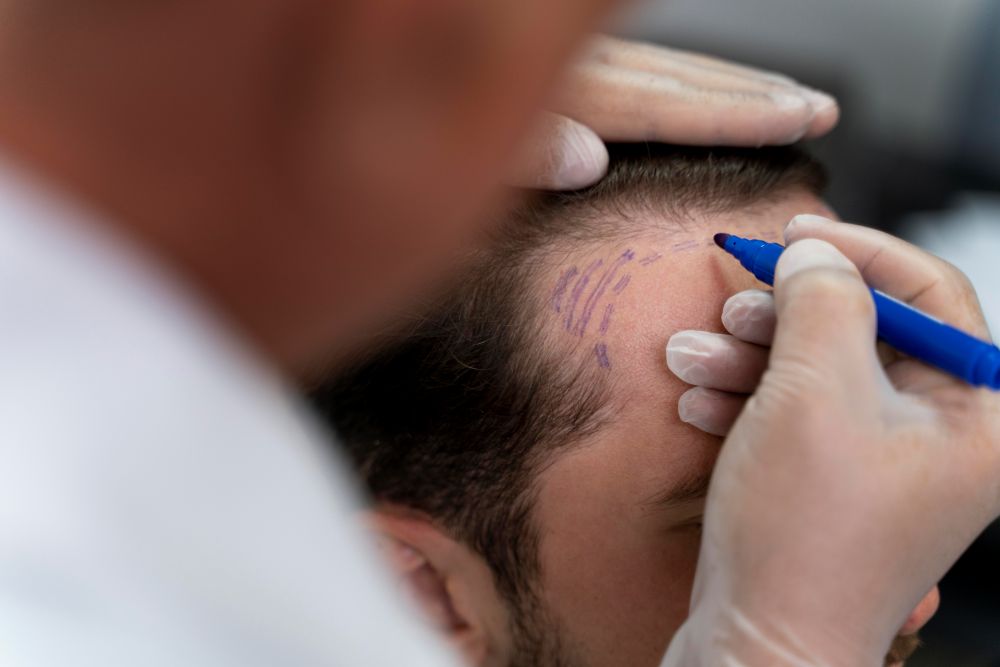
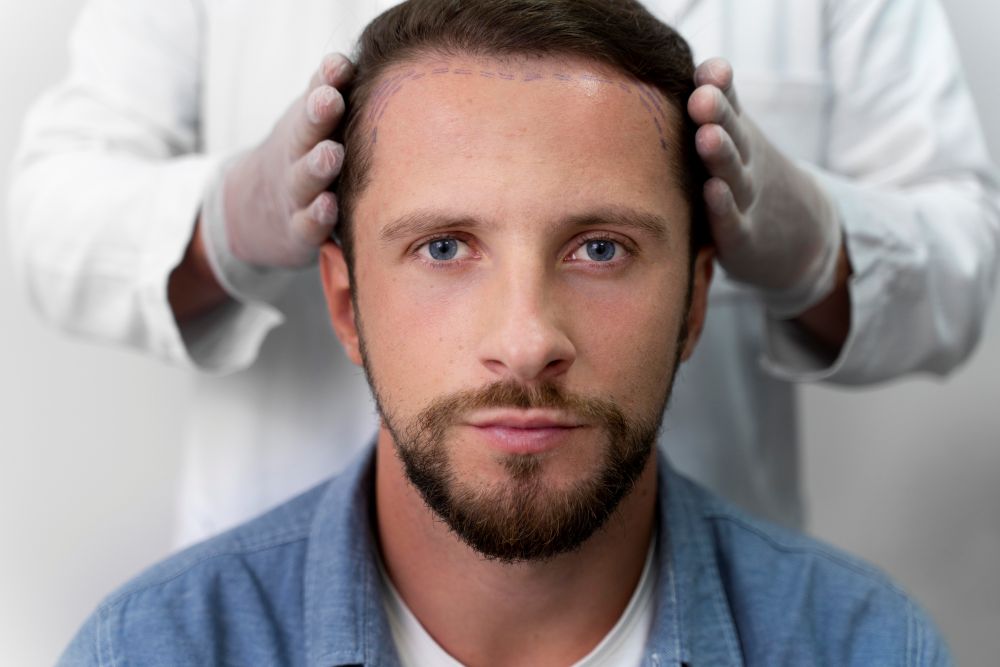
- Reviewing and marking the donor and recipient areas.
- Administering anesthesia to numb the treatment areas.
- Harvesting donor follicles using the planned technique.
- Preparing the grafts and recipient area.
- Placing the grafts into recipient sites.
- Reviewing postoperative instructions before discharge.
Local anesthesia is commonly used during hair transplant surgery. Some discomfort, tenderness, swelling, or changes in scalp sensation can occur during recovery.
Hair transplantation should be treated as surgery, even when techniques are described as minimally invasive. The ISHRS position on qualifications for scalp surgery states that procedures involving incisions to harvest donor tissue or prepare the scalp to receive grafts are surgical procedures and should be performed by properly trained and licensed physicians within applicable laws and professional standards.
After Your Procedure: A Typical Hair Transplant Recovery Timeline
Recovery varies from patient to patient. The procedure used, number of grafts, individual healing response, medical history, and postoperative protocol can all influence the timeline.
The following stages describe a general pattern and should not replace your physician’s postoperative instructions.
Days 1 to 3
Tenderness, redness, swelling, crusting, or a feeling of tightness may occur in the donor or recipient areas during early healing.
Your physician will explain how to protect the grafts, care for your scalp, manage discomfort, and sleep during the first few nights.
Avoid touching, rubbing, or scratching the transplanted area unless specifically instructed otherwise.
Days 4 to 14
Small crusts or scabs may remain around transplanted follicles as the scalp heals.
Do not pick at the treated area. Follow your surgeon’s instructions regarding when and how to wash your hair.
Recovery may differ depending on whether FUE or FUT was used. FUT involves healing of the donor incision, while FUE involves many individual extraction sites.
Weeks 2 to 8
One stage that surprises many patients is temporary shedding.
Transplanted hair commonly falls out between two and eight weeks after surgery. This shedding can be part of the normal transplant process.
The amount and timing of shedding vary, and not every patient will have exactly the same experience.
Months 2 to 4
Early growth may begin during this period, but the hairs can initially appear thin, sparse, or uneven.
Results at this stage should not be considered final. The transplanted follicles need time to enter a new growth cycle.
Months 4 to 6
More transplanted hairs may begin growing, and gradual improvement in coverage can become easier to notice.
Density and texture continue to develop over time, and the rate of change varies between patients.
Months 6 to 9
This is when many patients begin seeing more noticeable cosmetic improvement. Most patients see hair transplant results between six and nine months after surgery.
Months 9 to 12
Hair may continue to thicken and mature during the later part of the first year. The transplanted area may also begin blending more closely with surrounding hair. Some patients need approximately 12 months before their results can be meaningfully assessed.
Beyond Month 12
Some patients may continue to notice changes after the first year.
If you are concerned about density, symmetry, growth, donor-area appearance, or continued hair loss, discuss your concerns with your treating physician.
The need for another procedure should be based on an individualized evaluation rather than assumed from an early result.
READ MORE: What Not to Do After Stem Cell Treatment: Expert Do’s & Don’ts

Possible Complications and Realistic Outcomes
Hair transplantation is surgery, and no surgical procedure is risk-free.
Possible hair transplant risks include:
- Bleeding
- Infection
- Scarring
- Unnatural-looking hair growth
- Lack of growth of transplanted grafts
- Results that do not meet the patient’s expectations
Other postoperative concerns should be discussed directly with your treating physician.
Contact your medical team if you develop symptoms that concern you, particularly worsening pain, unexpected drainage, fever, increasing redness or swelling, or other significant changes after your procedure.
A hair transplant also does not create new hair follicles. The procedure moves existing healthy hair from one part of the scalp to another.
Hair loss and thinning can continue in untreated areas after surgery. Medication may sometimes be recommended after a transplant to help slow additional hair loss and preserve existing hair.
Things to Know About Hair Transplant Recovery
- Temporary shedding of transplanted hair during the first several weeks can be normal.
- FUE does not produce one long linear donor scar, but it should not be described as scarless.
- FUT generally creates a linear donor scar.
- Hair growth after transplantation develops gradually.
- Hair in untreated areas may continue thinning after surgery.
- Exercise, swimming, sun exposure, hair washing, and other postoperative activities should be resumed according to your own surgeon’s instructions.
- Early growth should not be interpreted as the final result.
- No reputable provider should promise guaranteed results, unlimited grafts, no risk, or scarless surgery.
The last point is particularly important for patient-facing marketing. The ISHRS Position Statement on Misleading and Inappropriate Messaging specifically identifies phrases such as “scarless surgery,” “guaranteed results,” “unlimited grafts,” and “no risk” as misleading language in hair restoration marketing.
Ready to Find Out Whether You Are a Candidate?
If you are considering a hair transplant, an individualized consultation at N2U Aesthetics can help determine whether the procedure is appropriate for your pattern of hair loss, donor supply, health history, and goals.
Call or request an appointment through N2U Aesthetics to learn more.
Frequently Asked Questions
When does transplanted hair start growing noticeably?
Hair transplant results develop gradually rather than immediately. Transplanted hairs commonly shed two to eight weeks after surgery. Most patients see results between six and nine months, although some may need about 12 months.
Early growth can look thinner or less uniform than the eventual result.
Does a hair transplant hurt?
Local anesthesia is commonly used during hair transplant surgery to reduce discomfort during the procedure. Tenderness or discomfort can occur afterward. The scalp may be tender during recovery and that some patients may need pain medication.
Pain experiences differ between patients, so concerns about severe or worsening discomfort should be discussed with the treating medical team.
How many grafts will I need?
There is no universal graft number that applies to every patient.
The appropriate number depends on factors such as:
- Size of the area being treated
- Available donor hair
- Hair thickness and other characteristics
- Desired coverage
- Previous transplant procedures
- Current and expected future hair loss
A personalized scalp and donor-area assessment is needed before a meaningful graft estimate can be provided.
Can I go back to work the next day?
Return-to-work timing varies according to the type and extent of the procedure, the patient’s recovery, and the nature of their job.
Some patients may feel physically able to perform light activities relatively soon, but visible redness, crusting, or swelling may still be present.
Follow the activity and work restrictions provided by your own physician rather than relying on a fixed number of days.
Is a hair transplant permanent?
Hair transplantation is designed to provide long-lasting hair growth, but the word “permanent” should not be interpreted as a guarantee that a patient’s overall appearance will remain unchanged for life. Hair loss and thinning can continue after a hair transplant. Treatment may sometimes be recommended to help preserve surrounding non-transplanted hair.
Future hair loss, aging, medical conditions, and individual graft growth can all affect the long-term appearance.
The Bottom Line on the Hair Transplant Timeline
Hair transplantation is a gradual process.
Transplanted hairs may shed during the first several weeks. New growth then develops over the following months, with many patients seeing more noticeable results between six and nine months. Some may need approximately 12 months before the result can be fully assessed.
Results vary based on donor hair, the underlying cause and progression of hair loss, surgical planning and technique, healing, and continued loss of untreated hair.
Hair restoration marketing should also avoid guarantees or claims that minimize the surgical nature of the procedure.
If you are considering hair restoration in Northridge or the greater Los Angeles area, you can contact N2U Aesthetics to discuss your options and determine whether an in-person evaluation is appropriate.
Call UsMedical Disclaimer
This article is for general educational purposes only. It is not medical advice and is not a substitute for diagnosis, treatment, informed consent, or individualized instructions from a qualified healthcare professional. Hair transplant candidacy, procedure selection, recovery, complications, and results vary between patients. Do not start, stop, or change prescription medication or medical treatment based on this article. Discuss your medical history, medications, expected benefits, alternatives, risks, and postoperative instructions with your treating healthcare professional.
You May Also Like: Juvederm® vs. Restylane® vs. Belotero®: Choosing the Right Filler